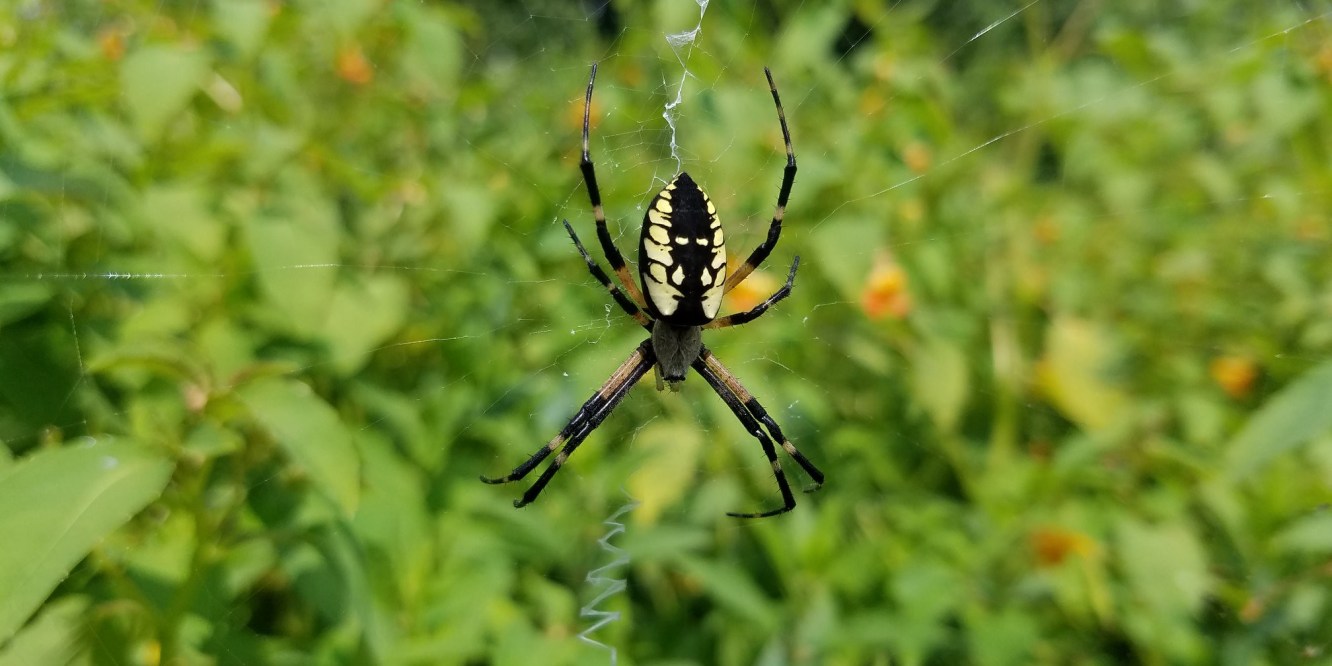
Few things wake up a gardener quite as quickly as walking face-first into a spider web.
Late summer and early fall are the times of year when homeowners are most likely to notice large spiders and their webs around gardens, lawns and homes. This does not necessarily mean there are suddenly more spiders. Many have simply had the entire growing season to mature, and their size and web-building activities now make them much easier to see.
Although an unexpected encounter with a large spider can be startling, most spiders found in Kansas are beneficial. They spend their days and nights capturing flies, moths, beetles, mosquitoes and many other insects. Without these natural predators, insect populations would be much more difficult to manage.
Two Spiders Deserve Caution
Kansas has two spiders of medical significance: the brown recluse and the black widow.
Brown recluse spiders prefer quiet, undisturbed locations such as boxes, storage areas, closets, sheds and garages. Black widows are more commonly associated with protected areas such as woodpiles, outbuildings, crawl spaces and cluttered corners.
Neither spider normally seeks out people, but bites can occur when a spider is trapped against the skin or disturbed. Wearing gloves when moving firewood, boxes or stored materials and avoiding reaching into places you cannot see can reduce the chance of an encounter.
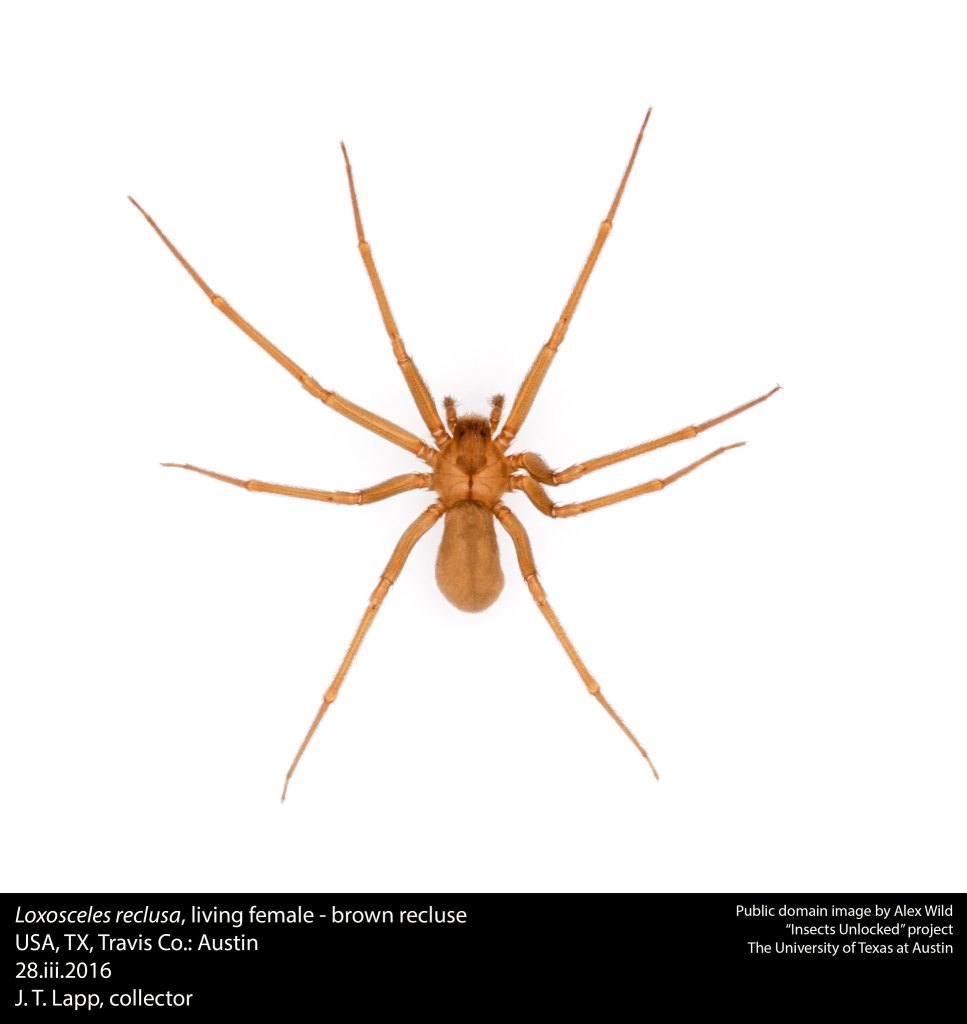
The most distinguishing characteristic of the brown recluse, regardless of its age is the dark- brown ‘violin-shaped’ marking on the top of its body with the neck pointing toward the abdomen (rear). For help with identification, contact the K-State Extension office or a pest control professional.
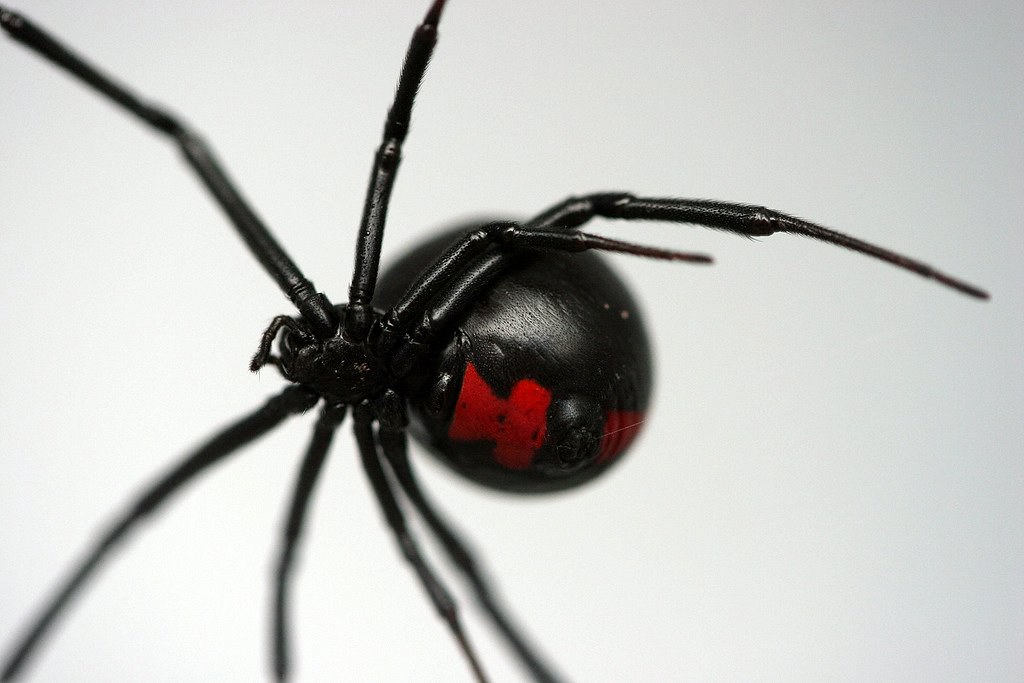
The characteristic marking of the adult female black widow spider (the male is not poisonous) is the red hourglass, which consists of two triangles on the underside of the abdomen
Large Garden Spiders Are Working for You
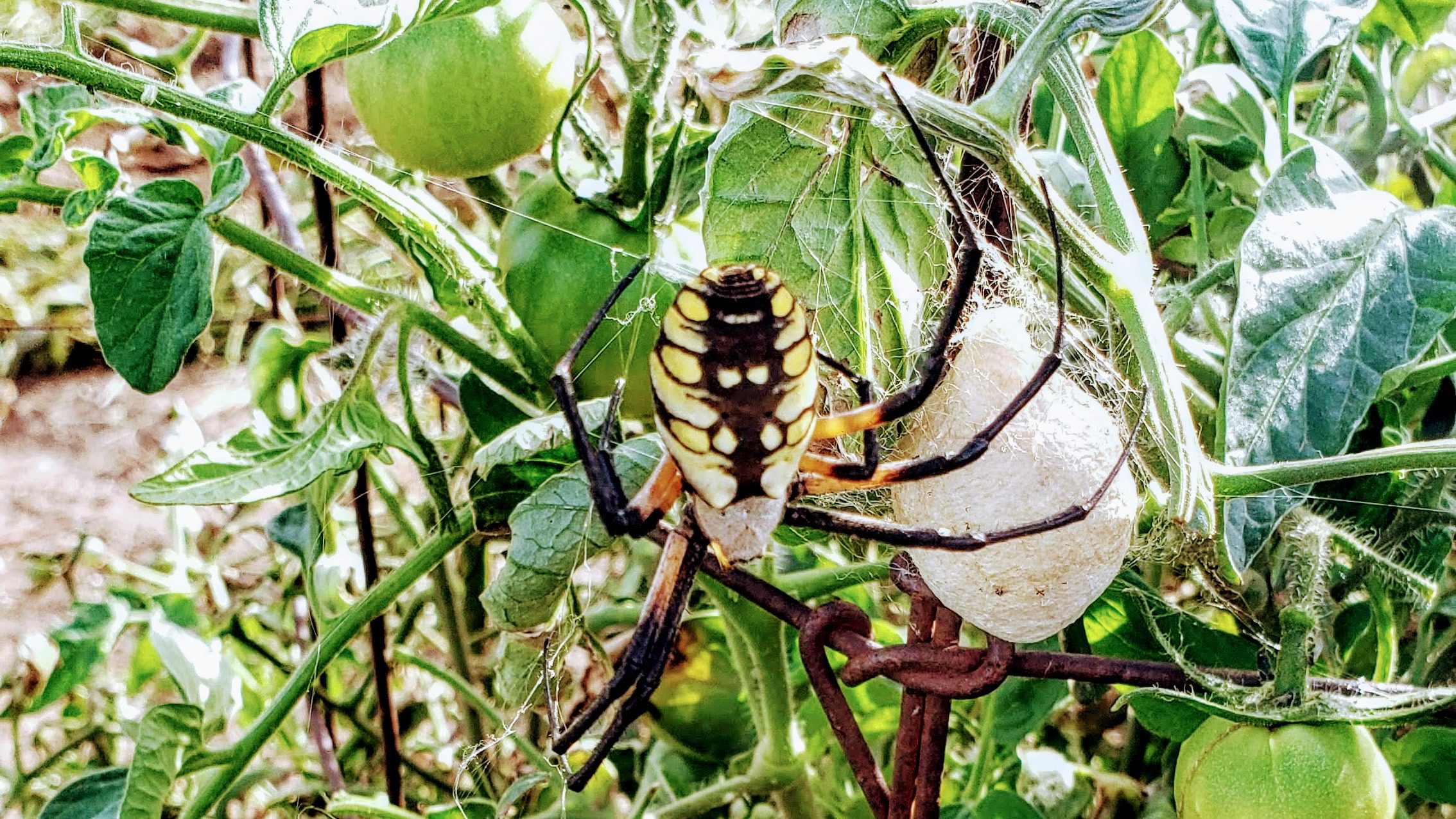
Two of our most noticeable late-summer spiders are the yellow garden spider and the banded garden spider. Both construct large, circular webs among flowers, shrubs, tall grasses and vegetable plants. Unfortunately, they occasionally choose to stretch those webs across garden paths and other inconvenient locations.
The yellow garden spider has a large black abdomen with bright yellow or yellow-orange markings. Its web often contains a distinctive zigzag of heavier silk near the center.
The banded garden spider has bands across its abdomen and legs. The abdomen generally has alternating light and dark bands, while the legs may be marked with black, orange or yellow.
Despite their size, these spiders have poor eyesight. They rely primarily on vibrations traveling through the web to detect prey. When an insect becomes entangled, the spider quickly moves across the web, bites the prey and wraps it in silk.
Garden spiders feed on many different insects, including flies, moths, beetles, wasps and mosquitoes. They do not damage plants and are not aggressive toward people. If a web is not in the way, the best response is simply to leave it alone and allow the spider to continue working.
If a web blocks a doorway or frequently used path, gently removing part of it may encourage the spider to rebuild in a less inconvenient location.
Watch for Funnel Weaver Webs
Funnel weaver spiders, sometimes called grass spiders, produce broad, sheet-like webs with a funnel-shaped retreat along one edge. These webs are often found in lawns, low shrubs, foundation plantings and corners of buildings. Morning dew can make dozens of them suddenly visible across a lawn.
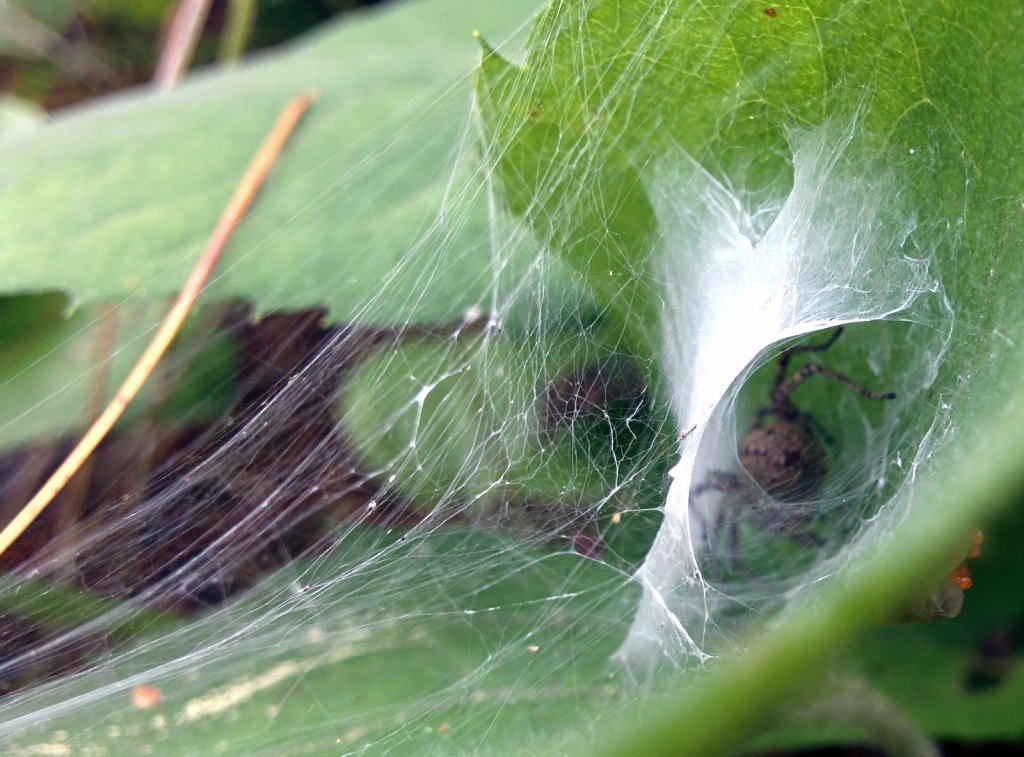
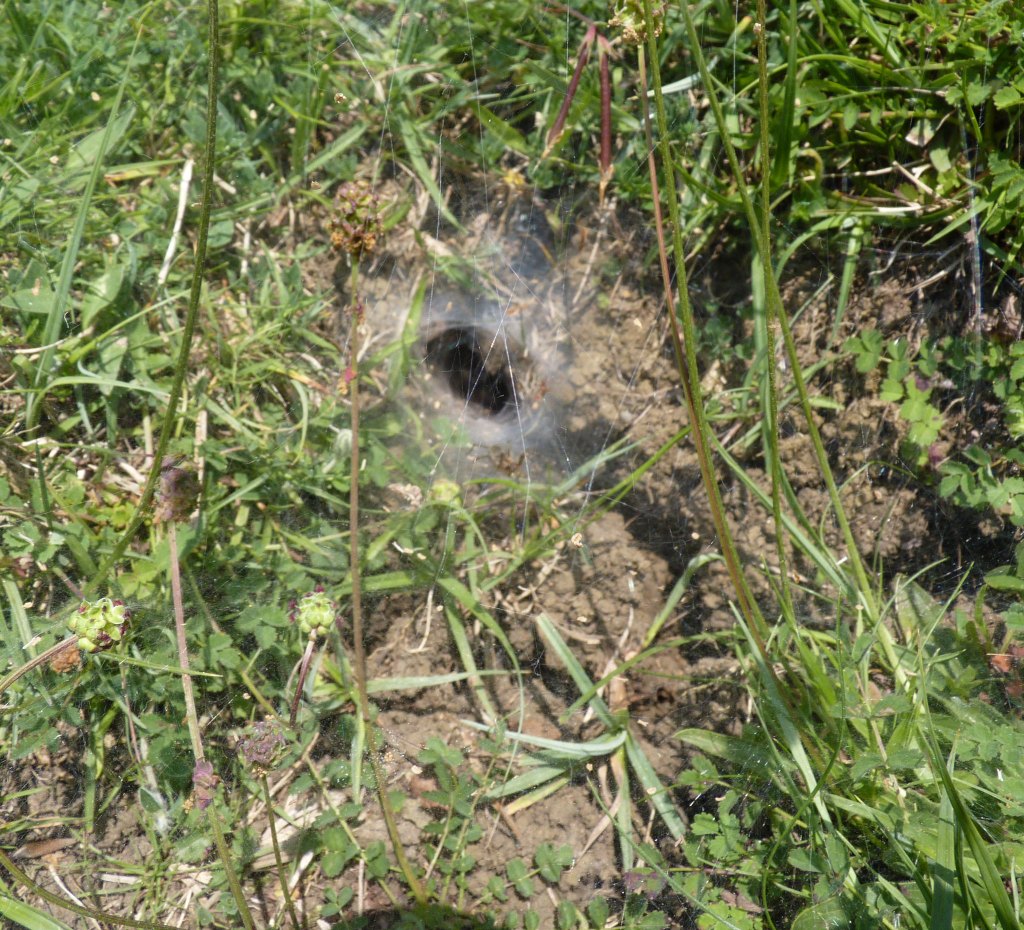
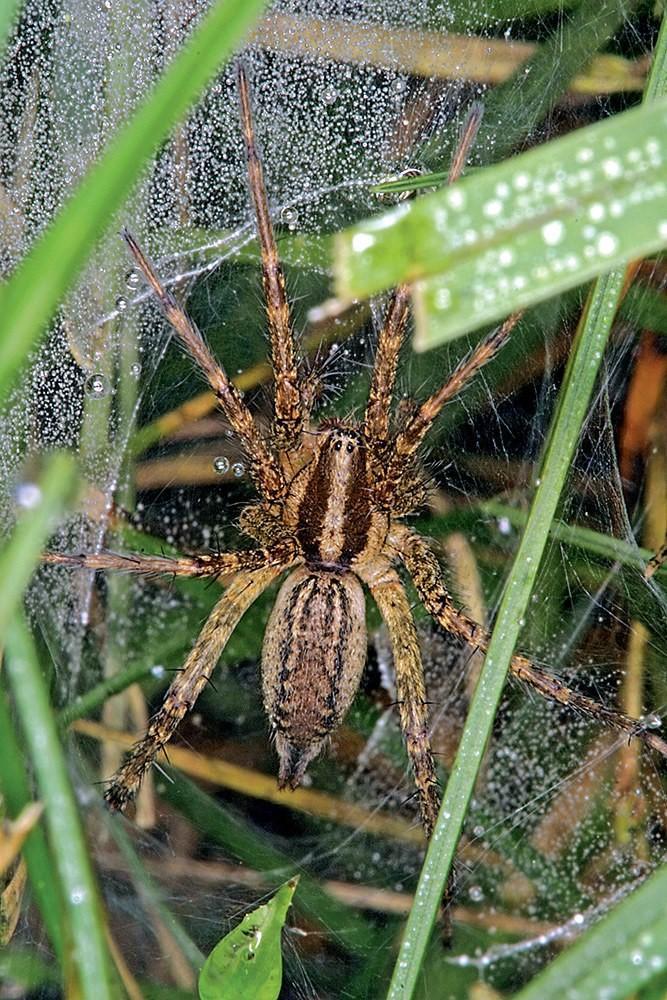
The spider waits inside the funnel until vibrations indicate that an insect has landed on the web. It then rushes out to capture its prey.
Funnel weavers are fast-moving, brown or gray spiders and are sometimes mistaken for brown recluse spiders. However, funnel weavers are usually patterned and hairy, and their large, exposed sheet webs are quite different from the hidden, irregular retreats used by brown recluse spiders.
These spiders are harmless garden predators and do not need to be controlled outdoors.
Wolf Spiders Hunt Without Webs
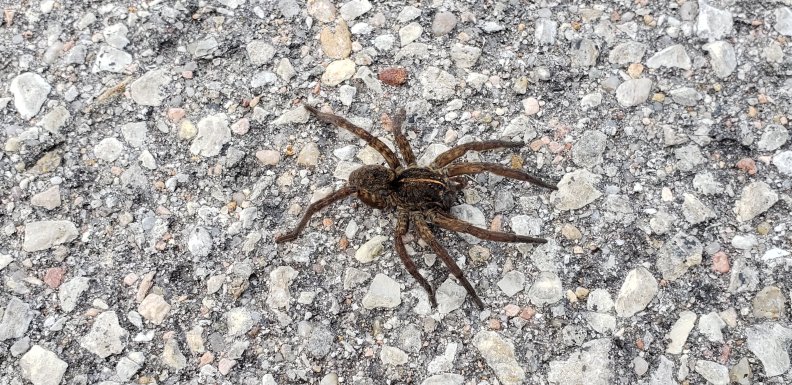
Wolf spiders are another group that frequently alarms homeowners because they can be large and move very quickly. Unlike garden spiders and funnel weavers, wolf spiders do not construct webs to capture prey. Instead, they actively hunt insects along the ground, especially at night.
They commonly shelter beneath rocks, boards, mulch, firewood and other protected areas. Some species also use shallow burrows in the soil. Most wolf spiders are brown or gray with stripes or mottled patterns running along the body.
Wolf spiders are not aggressive. They may bite if trapped against the skin or handled, but bites are uncommon and generally not medically significant.
When Spiders Wander Indoors
Funnel weavers, wolf spiders and other outdoor spiders occasionally wander into homes through gaps beneath doors, foundation cracks or damaged screens. Finding one indoors does not mean a home is infested.
If you are comfortable doing so, place a container over the spider, slide a stiff piece of paper underneath and release it outdoors. Avoid handling spiders directly, especially when identification is uncertain.
Sticky traps placed along baseboards can help capture and monitor spiders that are wandering indoors. Sealing gaps around doors and windows, repairing screens and reducing clutter in basements, garages and storage areas will provide better long-term control.
Outdoors, pesticides are not needed for garden spiders, funnel weavers or wolf spiders. These beneficial predators are part of a healthy garden ecosystem. When they appear in late summer, try to see them not as unwelcome visitors, but as evidence that some of the garden’s hardest-working insect hunters are on the job.

