
Bagworms are a well-known and widespread pest in Kansas, especially during mid to late June. This is the critical window to scout for activity and apply treatments if needed. Left unchecked, these caterpillars can cause serious damage—especially to evergreens like junipers, arborvitae, and cedars.
While evergreens are most commonly affected, bagworms aren’t picky. They can also feed on many deciduous trees and shrubs, including maples, oaks, and roses.

Young Bagworm
Photo: Raymond Cloyd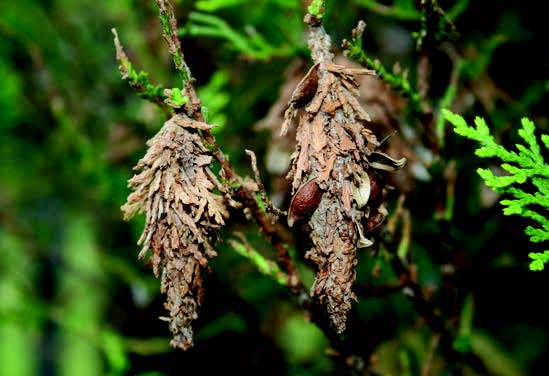
Mature Bagworm
Photo: Raymond Cloyd
Damaged caused
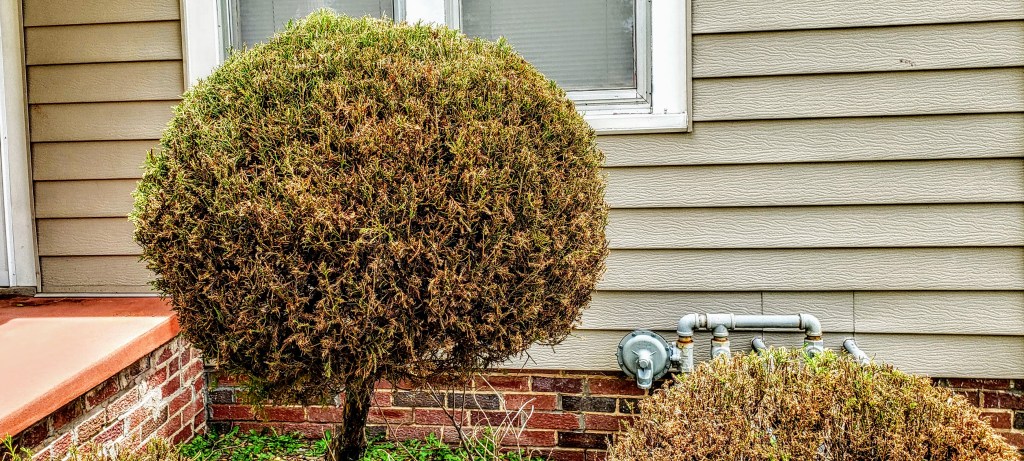
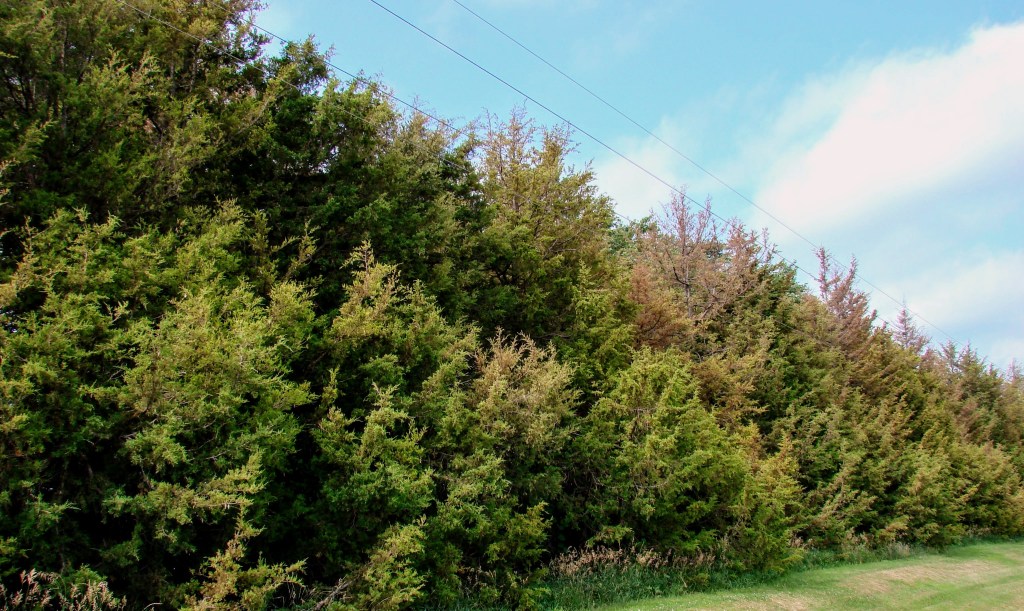
Bagworms feed by chewing the foliage of their host plants, and severe infestations can lead to extensive defoliation. Evergreen plants are especially vulnerable because they do not have dormant buds from which to regrow lost foliage. Once the majority of needles are gone, recovery is unlikely and plants may die.
Deciduous plants, on the other hand, are more resilient. They can usually sprout new leaves from dormant buds after damage, so long-term impacts are rare.
Timing is critical
Bagworms hatch from late May into early June, but early-stage feeding is often hard to spot. The tiny caterpillars create small, mobile bags and cause minimal damage at first. By the time you notice significant browning or defoliation, the larvae are often large and much harder to control.
Once feeding stops and the larvae tie off their bags in mid to late August, it’s too late for treatment—pesticides can’t reach them through the tough bag.
The ideal window to treat for bagworms in Central Kansas is mid-June through early July, while the larvae are still small, active, and exposed.
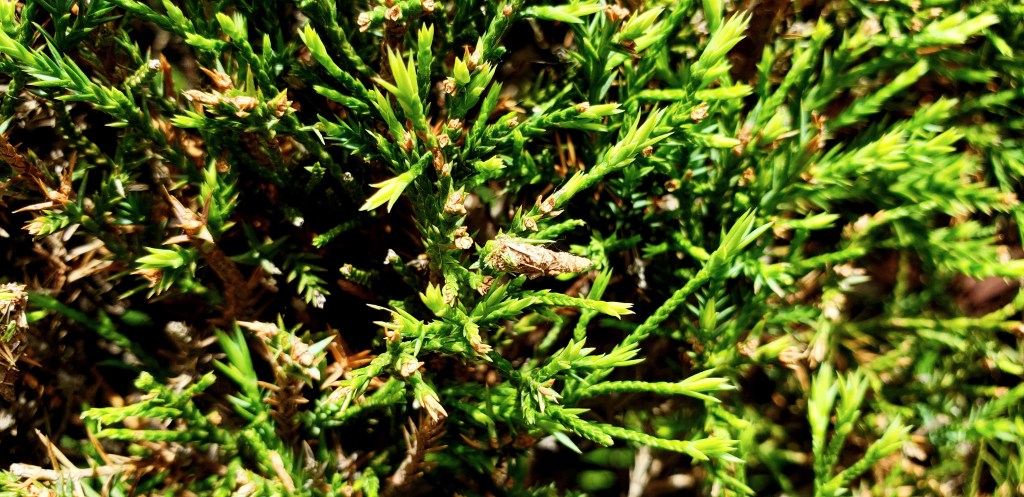
Take time now to inspect your trees and shrubs closely. Dense foliage can hide early infestations, but once you spot one small bagworm, others are likely nearby—watch for movement and feeding.
Treat if necessary
If you find active bagworms, apply an appropriate insecticide while the larvae are still small. Many insecticides are effective, but the two keys to success are:
- Proper Timing: Treat while larvae are actively feeding and small (late June through early July)
- Thorough Coverage: Spray all sides of the plant—including the interior branches—not just the outer foliage.
For trees that haven’t been heavily damaged by bagworms in the past, one thorough insecticide spray in late June or early July should be all that is needed to avoid damage. For trees that have been damaged heavily in the past by bagworms two sprays are often recommended. The first in early to mid-June to control the initial hatch and the second 3-4 weeks later to eliminate the latter hatching bagworms.
For large trees or windbreaks, consider hiring a professional with the proper equipment to ensure complete coverage.
Effective Products
Look for insecticides labeled for bagworm control. Common active ingredients include:
- Spinosad (e.g., Captain Jack’s Dead Bug Brew, Monterey Garden Insect Spray) – Organic option.
- Bacillus thuringiensis (Bt) – Effective against young larvae and organic.
- Acephate (e.g., Orthene, Bonide Systemic Insect Control)
- Cyfluthrin (e.g., Tempo, BioAdvanced Vegetable & Garden Insect Spray)
- Permethrin (e.g., Hi-Yield 38 Plus, Eight Insect Control)
Note: Bt and spinosad products are best used while larvae are still small. Spraying in August is usually ineffective—by then, bagworms have stopped feeding and are protected inside sealed bags.
Want to Learn More?
For more detailed guidance on identification, life cycle, and control strategies, check out the K-State Research and Extension publication on bagworms:
 Central Kansas Lawn & Garden Blog