
Monarch butterflies are one of the most beloved and recognizable insects in North America. From an early age, many of us learn about their life cycle, metamorphosis, and remarkable migration, as well as their unique dependency on milkweed, the only plant their caterpillars can eat.
Here in Central Kansas, monarchs pass through our gardens each year as they migrate north from overwintering sites in Mexico, then return south in the fall. It’s always a joy to see their orange-and-black wings fluttering through our landscapes.
But behind that beauty is a troubling trend.
Monarch Populations Are Declining
Monarch numbers have been dropping for years, and the annual census continues to reflect long-term declines. One of the biggest reasons is habitat loss—especially the loss of milkweed and other native plants that support monarch breeding and feeding.

Milkweed is essential. Without it, monarchs have nowhere to lay their eggs, and caterpillars have nothing to eat.
🐛 It’s estimated that 1.8 billion additional milkweed stems are needed across the U.S. to support monarch recovery.
New Research: Smarter Garden Design Helps Monarchs
The good news? You don’t need a huge prairie to make a difference. Recent research from the University of Kentucky shows that even small home gardens can be valuable monarch habitat—if they’re designed with monarch behavior in mind.
Here are some key takeaways from that research to help you get the most out of your monarch garden.
1. Plant Milkweed on the Garden’s Edge
Monarchs locate milkweed using visual cues, like leaf shape and plant height. When milkweed was planted around the perimeter of a butterfly garden—rather than mixed in with other plants—it attracted 2.5 to 4 times more monarchs.
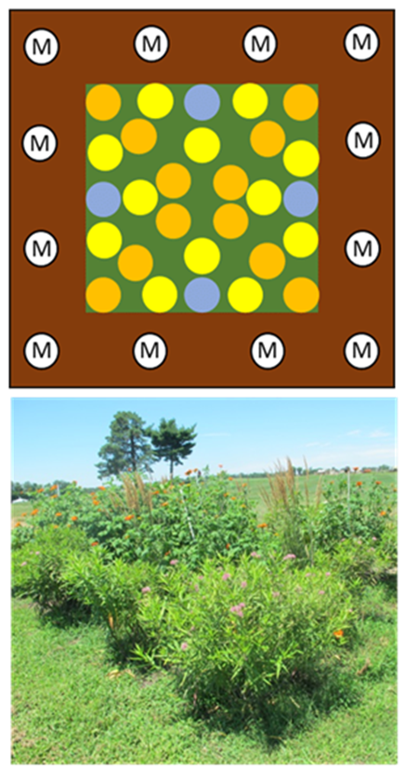

👉 Pro Tip: Group milkweed into clumps on the outer edges of your garden, and set them off with mulch to make them stand out even more.
Milkweed hidden among dense perennials or inside the middle of the bed is less likely to be found by monarchs. Keep it easy to see and reach.
2. Make It Easy to Fly In
Because monarchs migrate north and south each year, gardens with open, unobstructed access along a north-south flight path are more likely to attract passing butterflies. If possible, avoid placing your garden behind windbreaks or fences that might block access.
3. Use Native Milkweeds—Avoid Tropical Milkweed
In Kansas, always use native milkweed species, such as:
- Asclepias tuberosa (Butterfly Milkweed)
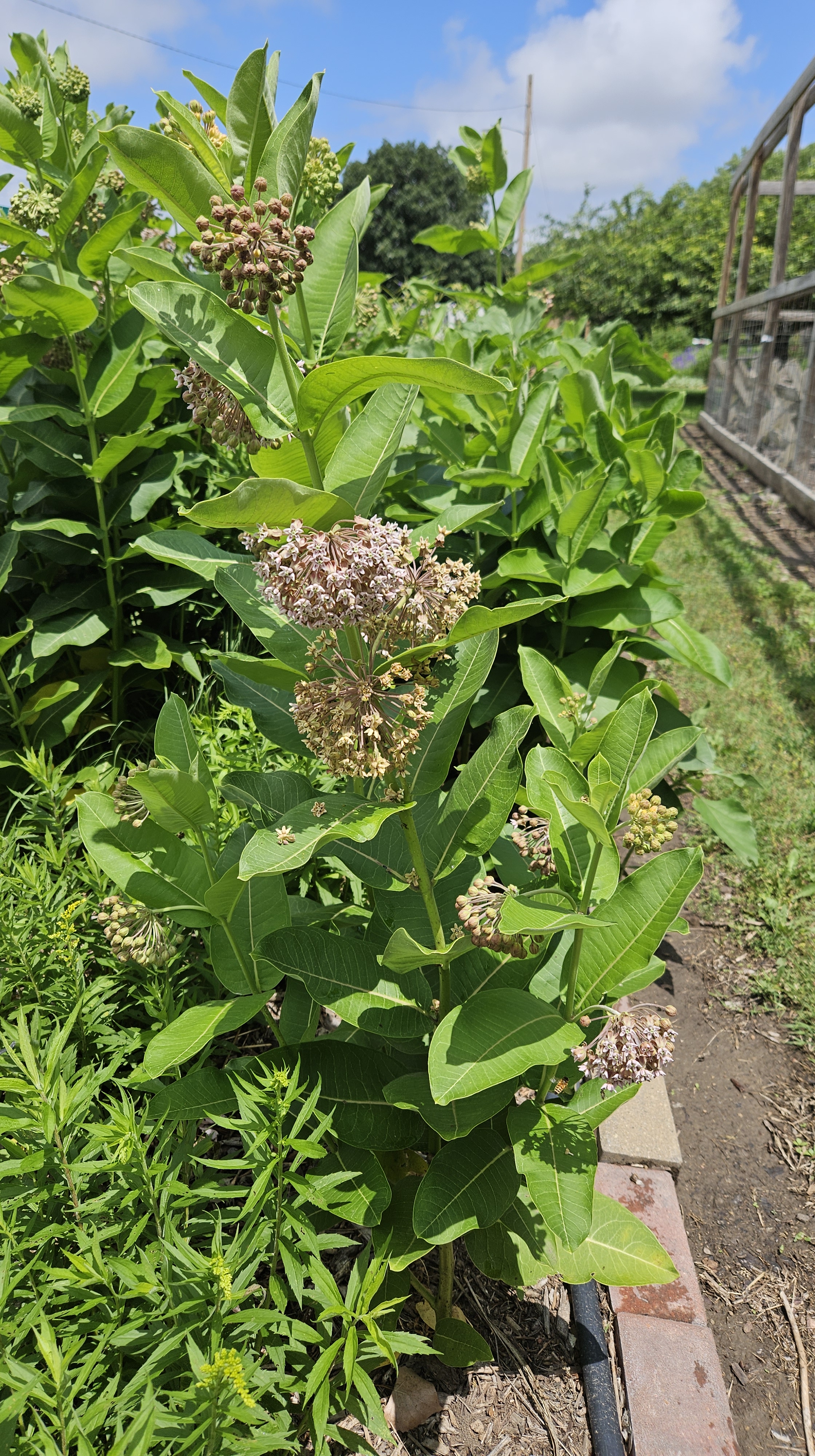
- Asclepias syriaca (Common Milkweed)
- Asclepias incarnata (Swamp Milkweed)


Avoid tropical milkweed (Asclepias curassavica). Its late-season blooms can confuse monarchs by delaying migration and increasing disease risk.
Check out this post for more milkweed varieties in Kansas

4. Yes—Small Gardens Can Still Help!
Even small plantings can support monarchs if they’re well-designed. You don’t need a big prairie—just a thoughtful layout and the right plant mix.
What Else Should a Monarch Garden Include?
Milkweed is critical for caterpillars, but adult monarchs need nectar. Plant a variety of nectar-rich flowers that bloom throughout the growing season.
👉 Plant in masses of three or more of each type to help butterflies locate them more easily.
Here are some good options by plant type:
🌼 Perennials
- Aster (Aster spp.)
- Bee balm (Monarda)
- Black-eyed Susan (Rudbeckia)
- Blazing star (Liatris)
- Catmint (Nepeta)
- Coneflower (Echinacea purpurea)
- Coreopsis
- Goldenrod (Solidago)
- Joe Pye weed (Eutrochium/Eupatorium)
- Phlox
- Scabiosa
- Sedum (tall varieties)
- Yarrow (Achillea)
🌸 Annuals
- Alyssum
- Globe amaranth (Gomphrena)
- Heliotrope
- Verbena (V. bonariensis)
- Pentas
- Cosmos
- Zinnia
- French Marigold
- Lantana
- Sneezeweed (Helenium ‘Dakota Gold’)
- Salvia (annual varieties)
🌿 Herbs
- Lavender
- Oregano
- Thyme
- Sage
- Dill
- Fennel
- Chives
- Marjoram
🌳 Shrubs
- Butterfly bush (Buddleia)
- Buttonbush (Cephalanthus)
- Lilac (Syringa)
- Mock orange (Philadelphus)
- Blue spirea (Caryopteris)
- Abelia
- Spirea
Bonus Features for Butterflies
🧂 Puddling Area: Monarchs get minerals from moist sand. Bury a shallow dish of sand and keep it damp for butterflies to sip from.
☀️ Basking Spots: Place a few flat, light-colored stones in sunny, wind-protected areas. Butterflies warm their wings on cool mornings.
🚫 Avoid Pesticides: Even organic sprays can kill butterfly eggs, caterpillars, and adults.
✂️ Deadhead Flowers: Removing spent blooms encourages continuous blooming and reduces unwanted reseeding.
Every Garden Counts
Creating habitat for monarchs isn’t just about beauty—it’s about biodiversity. Even a few square feet of thoughtfully planted garden can make a difference.
Let’s do our part in Central Kansas to help monarch butterflies thrive for generations to come.
 Central Kansas Lawn & Garden Blog