
Growing a fruit tree is an exciting prospect, and in central Kansas, many fruit varieties can thrive with proactive planning, protection, and care. If you’re new to fruit gardening, start by exploring our KSU Planning Your Fruit Garden publication here. Fruit trees require more attention and maintenance than many shade or ornamental trees, and proper pruning is essential to keeping them healthy and strong.
Reasons to prune

Proper pruning will ensure a much longer and more productive life for most fruit trees. Neglected fruit trees generally have very upright or narrow branch angles, which result in serious limb breakage under a heavy fruit load. This significantly reduces the productivity of the tree and may greatly reduce tree life.
There are several reasons for proper fruit tree pruning including: a strong tree structure, increased light intensity in the tree canopy to aid in fruit development, removal of dead, damaged, or unproductive wood, and control of tree size.
Pruning requirements vary for individual types of fruit trees but in general apple and peach trees require the most attention on a consistent basis. Trees that are pruned and trained within the first few years of life are by far the easiest to work with and will provide the best long term results. Once a young tree is trained properly it should be left until fruiting begins since too much pruning may actually delay fruiting.
Most older trees that are already bearing fruit simply need annual maintenance pruning once properly trained. This includes simply removing dead or diseased wood, crossing branches, upright water sprouts, and maintaining tree height.
The best time to prune most fruit trees is while they are dormant in late winter. This could be anytime from mid to late February into early to mid March.
Apple
For home gardeners it is recommended to train apple trees with a central leader (once main upright trunk) and several scaffold (fruit bearing) branches. The scaffold branches should be evenly spaced around the tree and not directly across from each other. Scaffold branches should also have wide angles at their attachment with the tree trunk to ensure strength for bearing a large fruit load. When young, the scaffold branches can even be spread with clothespins or toothpicks to create a wide angle as the tree grows.


Peach
Peach trees differ from apples in that they are trained with an ‘open center’. This means they will not have a central leader, but instead 3 to 5 scaffold branches coming out from wide angles at the trunk. Peach trees require more pruning that any other fruit tree since they produce fruit only on the new wood grown the previous season. This means plenty of new wood must be grown each year for next year’s crop. If peach tree pruning is neglected, the tree will produce fruit farther and farther out from the main trunk each year, and the risk of tree breakage gets very high.

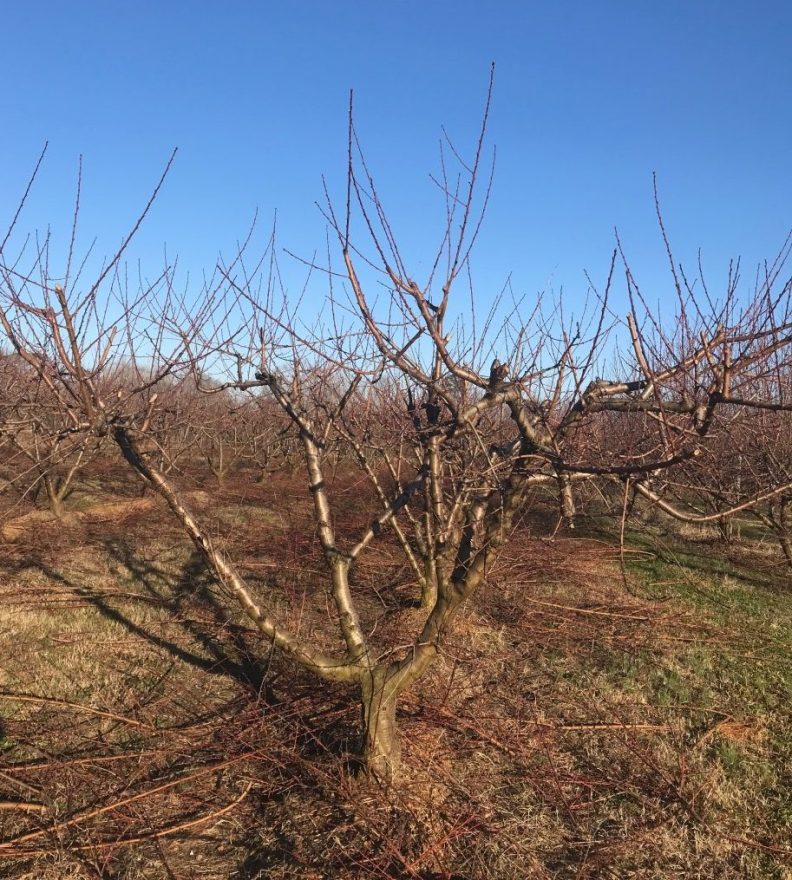
To watch a short video on pruning apple and peach trees from Utah State Extension, check out this post.
K-State Research and Extension Pruning guides
Check out our K-State Research and Extension pruning guides below for even more information
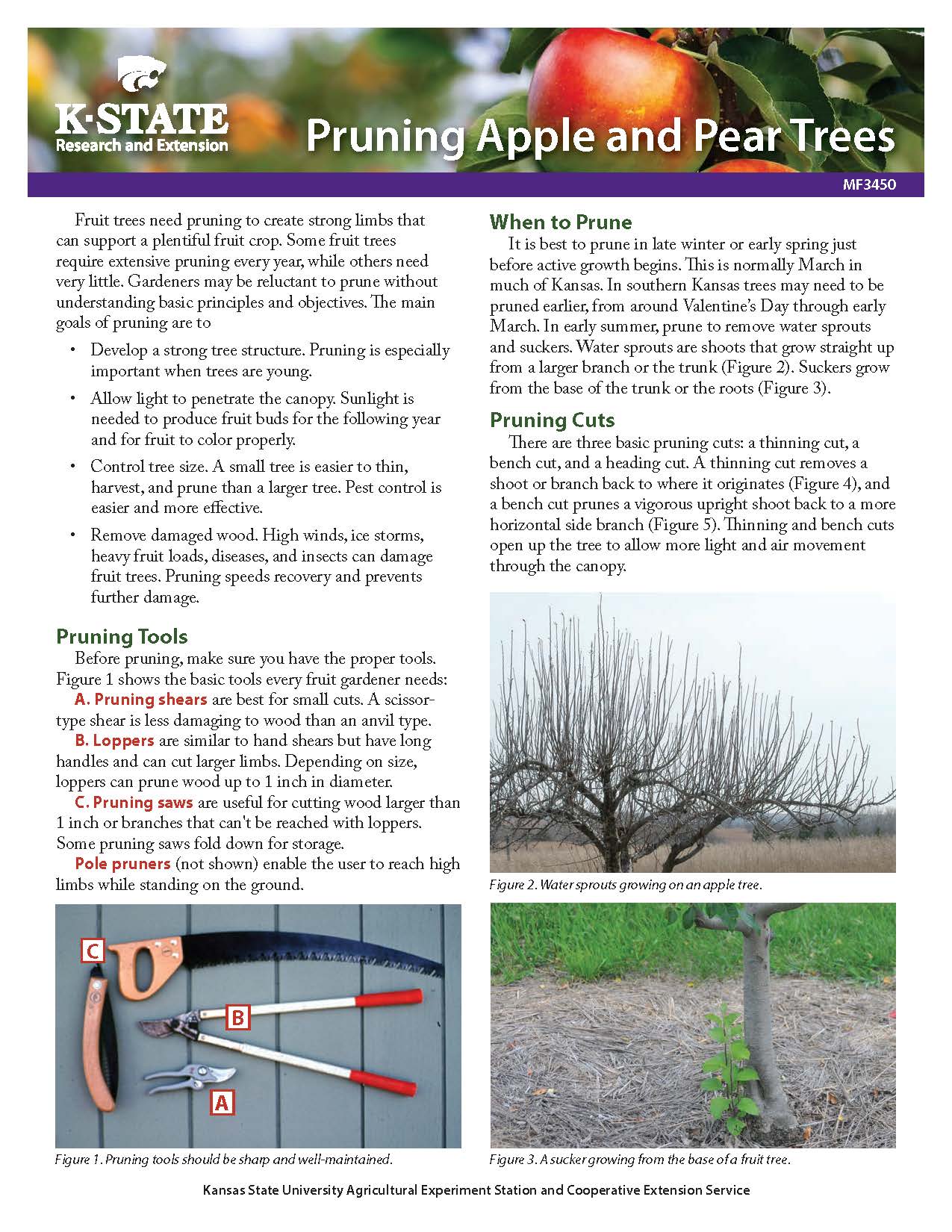

You can see all our K-State Research and Extension fruit publications here.
 Central Kansas Lawn & Garden Blog