
When it comes to success with our plants in the garden and landscape here in Central Kansas, the soil is the place to start. I like to tell gardeners “Grow the roots and the top will take care of itself”.
It is not a secret that soil health is what we gardeners want, but what can we do to actually build and create the healthy soil that seems so elusive?
Cover crops
If I could choose one practice to improve my garden soil it would be utilizing cover crops. There are immense benefits to growing plants in our soil that are not meant to be harvested at all. Cover crops are grown to build soil, prevent weeds, recycle soil nutrients, and even attract beneficial insects into the garden and landscape.
Maximize continuous living roots
The reason cover crops are at the top of the list for building soil health is due to the power of living roots. The rhizosphere is the soil layer where live plant roots interface with soil. The rhizosphere is perhaps the most powerful place in the soil because this is where soil life thrives.
By soil life we mean microbes such as bacteria and fungi in numbers so vast we could never count them. These microbes thrive in the rhizosphere because live plant roots feed them with sugars that are exuded through root tissues.
One thing that these microbes do in return is secrete ‘glues’ that begin to bind individual soil particles together into aggregates. The microbes live in and on these aggregates and aggregates form the circulatory system of the soil which allows both water and oxygen to move into and through the soil efficiently and effectively.
Every plant root cell requires both oxygen and water to thrive and so this beneficial arrangement between live plant roots and soil microbes leads to very robust and healthy plants if it can be fostered all year round.

Caution
As a note of caution, rototilling a garden too frequently is a certain way to destroy these carefully built soil aggregates and the networks of microbial life that created them.
What to do this fall
Early to mid-fall is a good time to plant a cool season cover crop in our Central Kansas gardens. Many summer crops are finishing their life cycle or being removed from the garden now. Rather than leave the soil bare-which is a desert for microbes-replace the plants being removed with a cover crop to keep living roots in the soil all winter long.
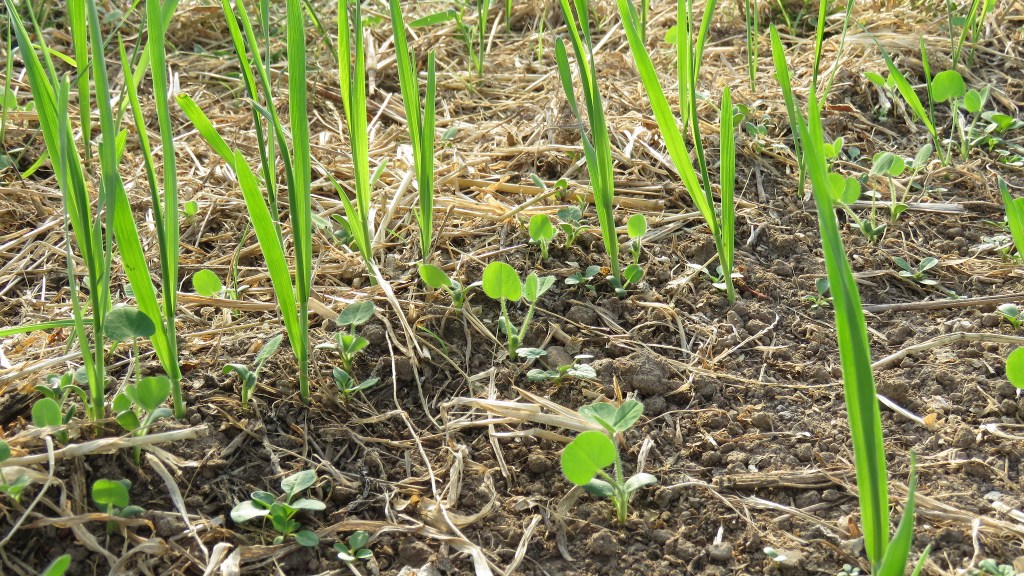
Crimson clover and winter wheat are two cover crops that can be planted in the fall to both create cover for our garden soils and maximize continuous living roots during the winter season.
Crimson clover is a legume that can also fix (add) nitrogen to the soil if allowed to grow long enough. Late August through early September is the ideal time to plant clover in order to allow time for plenty of growth before winter dormancy but an early October planting can still be successful.
Plant wheat at a rate of 1 lb./1000 square feet of garden space and consider including a legume such as crimson clover or hairy vetch to help fix nitrogen. There are a number of cover crop seed mixes available from suppliers which may also include other fall cover crops such as tillage radish or annual ryegrass.
Establishing cover crops
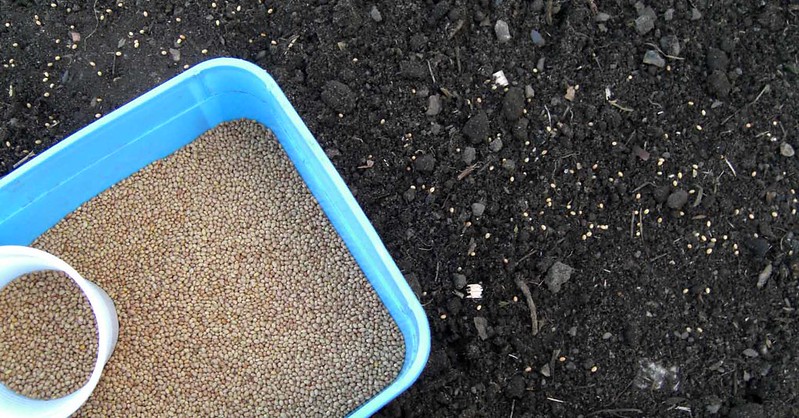
To establish cover crops, rake the soil and remove significant debris from the previous crop, broadcast seed at the rate recommended on the packet either by hand or with a broadcast seeder, rake the soil again to ensure good seed to soil contact , and then water as necessary to maintain moisture and avoid soil crusting which can reduce emergence of finer seeded cover crops.
Terminating the cover crop in spring
Cover crops that don’t winterkill will resume growth in the spring and can be mowed, cut with a string trimmer, and incorporated into the soil 10-14 days before planting warm season vegetables next spring.
Another option is to till or create planting strips in the cover crop to plant vegetables in and allow the remaining cover crop to be a living mulch between the plant rows in the garden.


Here is a sample list of cover crops that can be used in gardens here in Central Kansas
| Cover Crop | Planting Season |
| Legumes | |
| Crimson Clover | Spring, fall |
| Field Peas | Spring, summer |
| Hairy Vetch | Fall |
| Southern Pea | Spring, summer |
| Sunnhemp | Summer |
| Non-Legume / Broadleaves | |
| Buckwheat | Spring, summer |
| Tillage radish | Fall |
| Mustard | Spring, fall |
| Field turnip | Spring, fall |
| Grasses | |
| Annual ryegrass | Early spring, fall |
| Winter wheat | Fall |
| Millets | Summer |
| Oats | Spring, early fall |
| Winter Rye | Fall |
For some thorough reading on each potential cover crop that gardeners can use check out this K-State Research and Extension publication: Cover Crops for Vegetable Growers
 Central Kansas Lawn & Garden Blog