
If your garden did not quite go as planned this year you’re in luck. Now is the time to start planning and planting the fall garden. Planting a fall garden is a great way to prolong harvest and enjoy fresh produce until winter arrives. Many vegetables are more productive and have better flavor in the fall compared to those that are planted in the spring. When planted in the spring, brassicas (broccoli, cauliflower, cabbage, etc) will bolt or go to seed early once the weather warms up rather than producing a good crop. Vegetables that mature in the fall are less likely to bolt and will often have better flavor.
What to plant
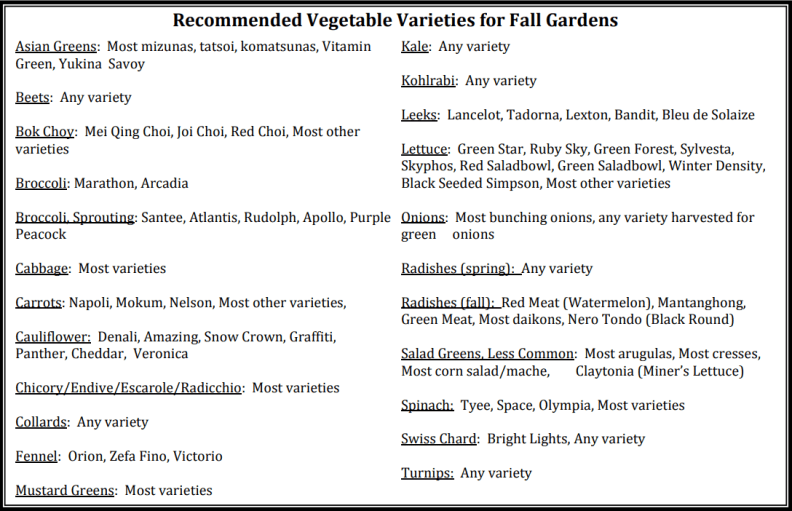
Cool season vegetables such as leafy greens, root vegetables, and brassicas, do well in a fall garden. You can use the same seeds you planted in the spring for your fall garden and the table below has recommendations for many good options.
When to plant
- Mid- to late July: Cabbage, broccoli and cauliflower can be started from seed at this time. Plant seed beets, carrots and beans directly into the garden.
- Late July to early August. Plant seed spinach and long-season maturing lettuce.
- Second week of August. Transplant cabbage, broccoli and cauliflower
- Mid- to late August. Plant radishes and leaf lettuce seeds directly in the garden
Dealing with summer heat
Planting
Seeds directly planted in the ground should be planted slightly deeper than what is recommended in the spring. This helps the seeds retain moisture longer and stay cooler.
Mulch
Mulch will help keep the soil more evenly moist and cooler during the hot summer months. Applying a layer of straw onto the growing area two weeks before planting can cool the soil temperature slightly.

Water
When seeding directly in to the ground, it is important that the top 1-2 inches of soil stay evenly moist during germination. To encourage deep root growth, gradually reduce watering once seedlings establish. Newly transplanted vegetables will also need more water initially, then water can be decreased to encourage deep root growth.
Transplanting
Starting seeds indoors allows plants to get a head start when the weather is too hot. Once you are ready to transplant, it is important to let your plants acclimate to the warmer outdoor conditions. On first day, place the plants in a protected location with partial shade. For the next 7-10 days slowly expose the plants to more sun until they are ready to be planted into the ground.
Shade cloth
A shade cloth can help cool the soil and the air temperature surrounding the plants as well as reduce moisture loss from the soil. The shade cloth should be lightweight as one that is too thick will reduce light penetration and air flow. The cloth should be removed once the plants are well established or when the temperatures become more moderate.
Dealing with Late Fall Cold
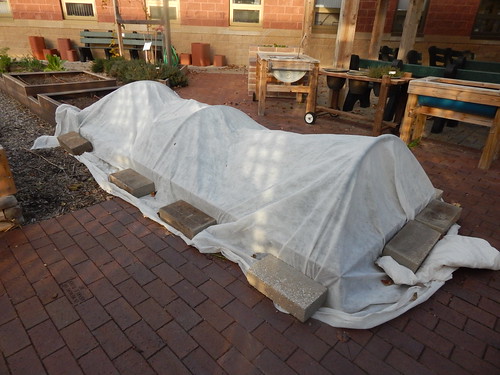
By the end of fall, the cold weather can create a challenge for gardeners. Typically the first light frost will occur in mid- to late October. A light frost will not damage fall vegetables as most can tolerate temperatures down to 28 degrees without much damage. When temperatures dip below mid 20s, a row cover can help protect vegetables from damage. The row covers should be removed during the day to allow the sun to warm the soil.
 Central Kansas Lawn & Garden Blog