
Weeds thrive when lawns suffer and are a major concern for many Central Kansas homeowners. Many weeds can be difficult to control and are unappealing in a lawn or landscape. Identifying what kind of weeds are invading is very important in determining the most effective control method.
Here are just a few common weeds that we often encounter.
Grassy Sandbur
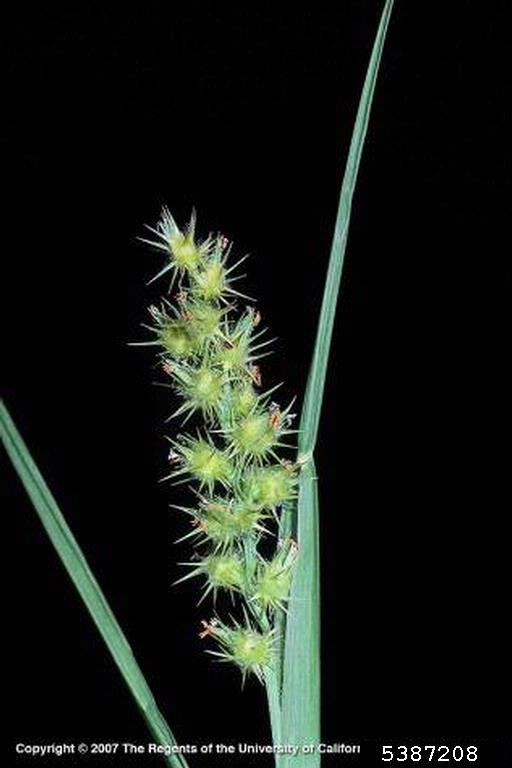
Grassy sandbur is an annual weed that looks like grass and produces sharp, spiny burs that can stick to clothing and pet fur. Sandbur are typically found in sandy soil but can grow in a wide range of soil conditions. Sandbur is difficult to control and hard to recognize before the burs form.
Read about how to control grassy sandbur here.
Foxtail
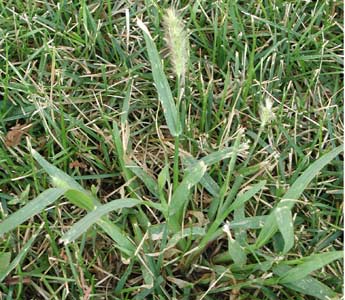
Foxtail is a summer annual weed that forms a coarse, upright or prostrate, bunch-type grass that usually branches at the base. It can grow up to 4 feet tall, with leaves from 2 to 12 inches long and produces a cylindrical, bristly flower.
Orchard Grass

Orchard grass is a cool-season perennial that often infests tall fescue lawns. It can be easily recognized in a lawn because of its lighter green color and faster growth than tall fescue. Orchard grass is a bunch grass that grows in clumps, therefore does not spread.
Controlling this grass is difficult because there are no herbicides that will kill orchard grass without killing your turf as well. Orchard grass is a common contaminant in grass seed, especially K-31 tall fescue. To avoid this, check the label to make sure the “other crop seed” is 0.0%
Crabgrass/Goosegrass
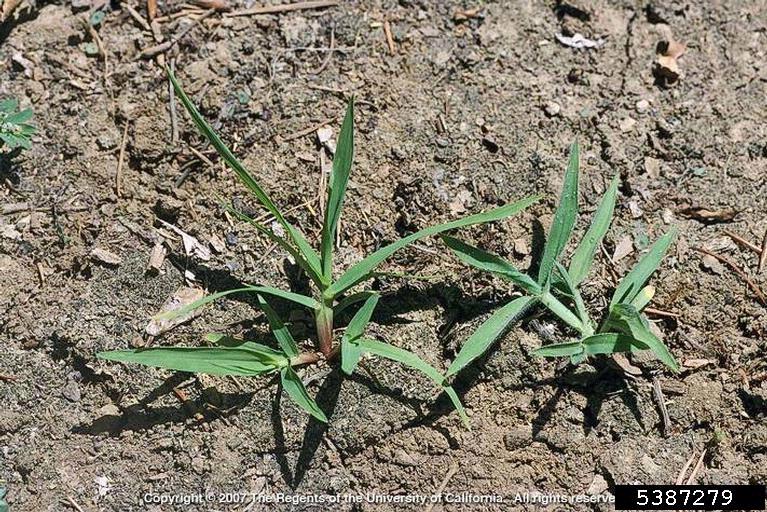
There are two common types of crabgrass, smooth crabgrass (on the left) and large crabgrass (right). Both are branched and grow upright of prostrate. Large crabgrass can grow more than three feet in height, has purple stems and is usually mat forming. Smooth crabgrass usually grows 15 inches or less. Both crabgrasses can be found where turf is thin or mowed too short and may spread aggressively to crowd out desirable grasses.

Goose grass is similar to crab grass, but can be identified by it’s flattened, white to silver stems.
Puncturevine
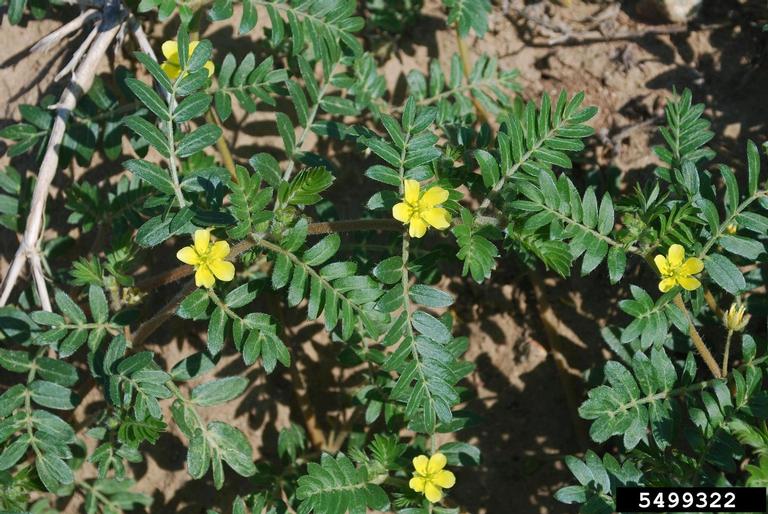
Puncturevine or goathead, is a mat-forming broad-leaf weed that produces burs with sharp spines. One plant can produce 200 – 5,000 seeds in one growing season that may remain viable in the soil for up to 5 years. Many broadleaf herbicides can effectively control puncturevine.
Spurge

Spurge emerges from seed in early-mid summer and forms a branched mat from a central taproot that can be up to two feet in diameter. It has pale green leaves that are oval shape and up to 3/5 inch long. Spurge can be prevented by applying preemergent before germination in the spring. Post emergent herbicide can be applied to young plants in late spring to mid summer.
Bindweed
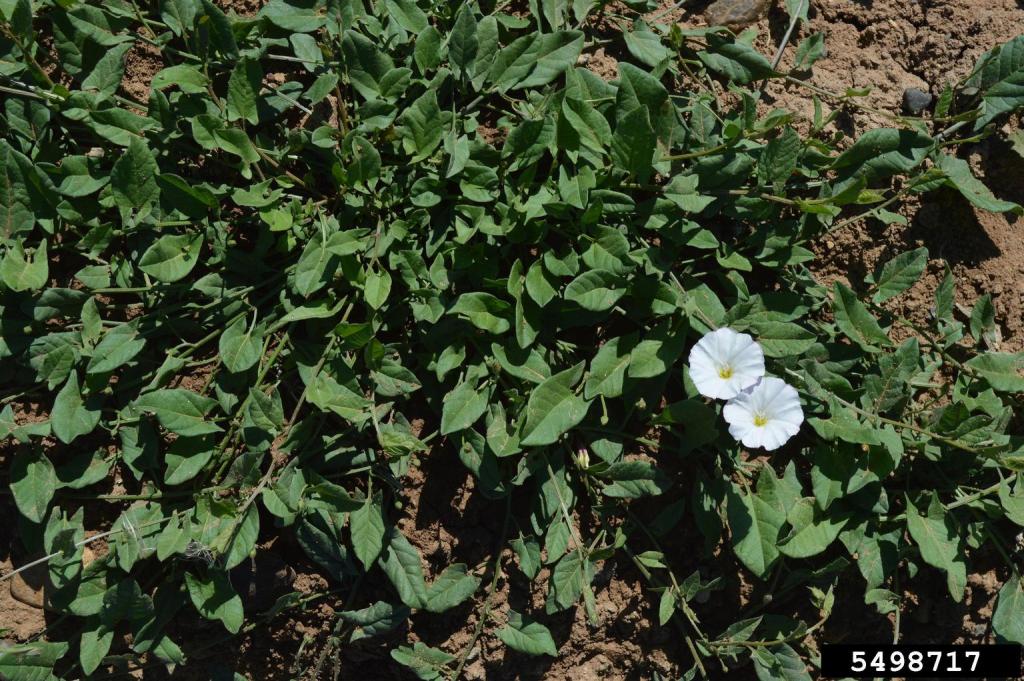
Field bindweed produces a vine with arrow or shield shaped leaves and pink or white blooms. It can grow up fences and around other plants. Its roots grow deep underground and can spread far enough to reach a neighboring yards. This weed is difficult to control once it is well established but there are effective herbicides available.
Yellow Wood Sorrel
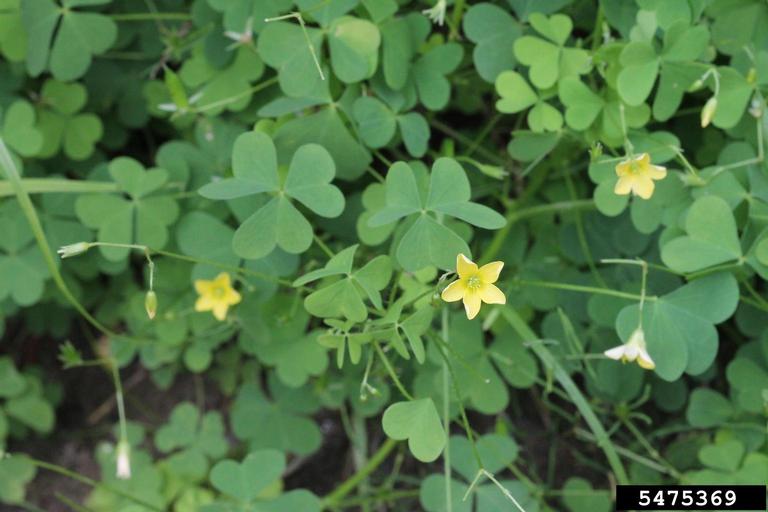
Yellow wood sorrel or oxalis, is a perennial that forms a small bushy plant with slender stems and clover-like trifoliate leaves. Managing wood sorrel can be challenging but new infestations can be hand pulled. Well established infestations can be controlled with herbicides but it may take several applications.
Yellow Nutsedge
Despite looking like a grass, this weed is actually a part on the sedge family. Sedge can be identified by its triangular stems and leaves that come off the stem in three directions. Yellow nutsedge is pale green to yellow and will grow taller than the rest of the lawn because of its rapid shoot growth. Nutsedge is difficult to control because it produces numerus tubers the give rise to new plants.
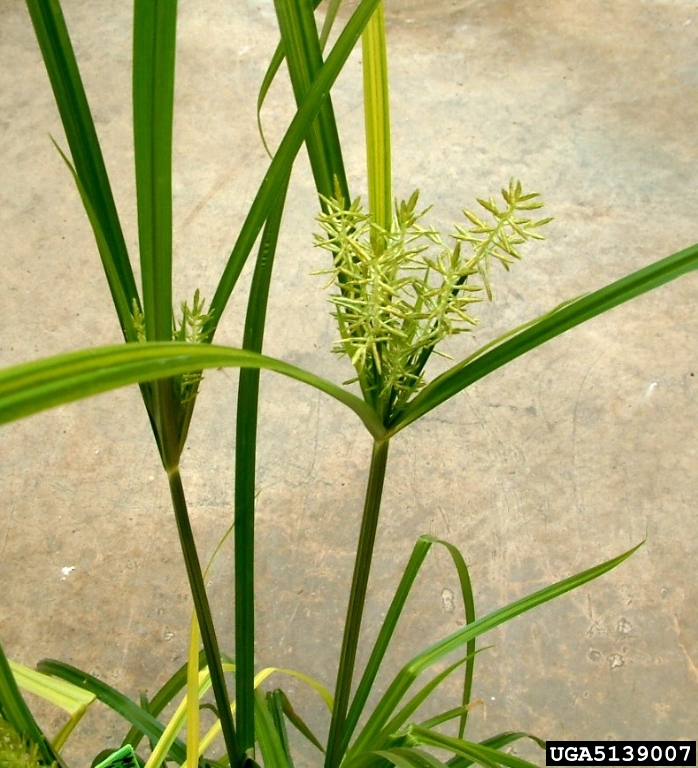
Lynn Sosnoskie, University of Georgia, Bugwood.org
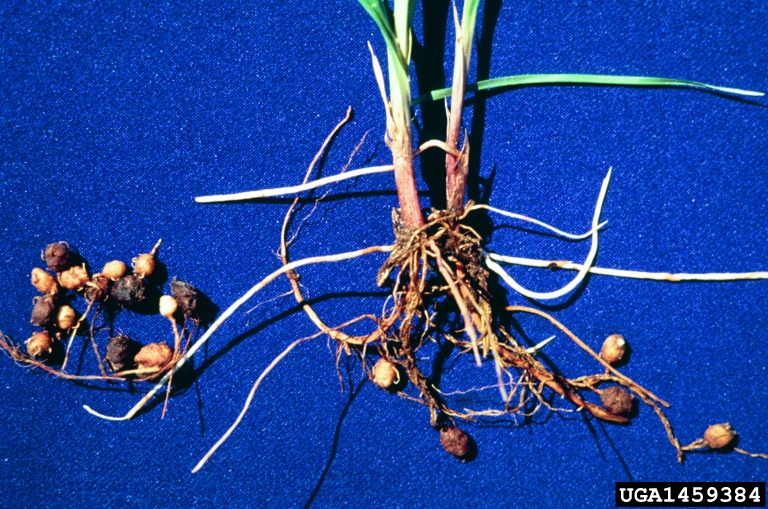
Steve Dewey, Utah State University, Bugwood.org
Prevention is the best control
The best defense against weeds is a dense, healthy, vigorous lawn. Weeds take advantage of open spaces in thin, weak stands of turf, which is why proper fertilization, watering, and mowing are important. Lawns should be mowed high enough so sunlight can’t get to the soil. This will keep weeds from germinating. Weeds can be prevented by using an appropriate preemergent herbicide that is timed correctly. Post emergent herbicides are affective when weeds are in the seedling stage after they germinate. When using any kind of postemergence herbicide, it is important to avoid applying to turf that is under stress and to use caution (follow label directions carefully) when the air temperature is over 90 degrees.
Check out our K-State Research and Extension publication on weed control in home lawns, to learn much more information about weed control in the lawn.
https://bookstore.ksre.ksu.edu/download/weed-control-in-home-lawns_MF2385
 Central Kansas Lawn & Garden Blog