
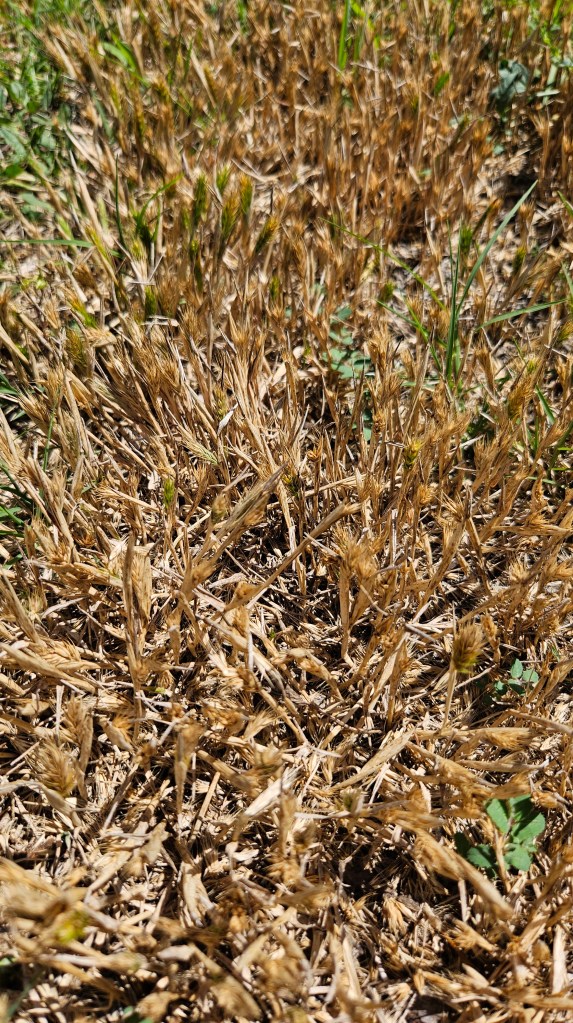
Little barley is a common weed in Kansas that can take over a thin lawn and leave unsightly brown patches as it dies off. Many local gardeners find it frustrating when the large brown/dead patches of little barley show up during the month of June.
Biology
Little barley is a winter annual weed that germinates in the fall and overwinters as a small plant. During the spring it grows very quickly and seed heads form. Little barley thrives in cooler temperatures, so by mid to late summer it will die out.

Management
The best control for little barley is a thick and healthy lawn that is mowed high enough that sunlight does not hit the soil. Little barley seed will not germinate well in these conditions and does not compete well with a healthy lawn. Overseeding in the fall (September) can thicken up a tall fescue lawn and help prevent a little barley infestation in the future.
Preemergence herbicides can also help control this weed if you do not plan to overseed your lawn, or if your lawn is a warm season turf such as bermudagrass, buffalograss or zoysia (these turf grasses are not seeded in the fall). Dimension (dithiopyr) is a preemergent that is labeled for barley. Dimension can be found in several products including, Hi-Yield Turf & Ornamental Weed & Grass Stopper and Bonide Crabgrass and Weed Preventer. Other products may contain Dimension in combination with fertilizer or broadleaf weed killers. Apply preemergence herbicide labeled for barley in early to mid August here in Central Kansas to ensure enough time to activate the preemergent before little barely begins to germinate.
For even more details check out our KSU common plant problems publication that covers little barley here.
 Central Kansas Lawn & Garden Blog