
Once houseplants have been moved indoors for the winter it is common to run into problems with tiny gnats that can be a big nuisance inside the home. What are these gnats and what can gardeners do about them?
Fungus gnat biology
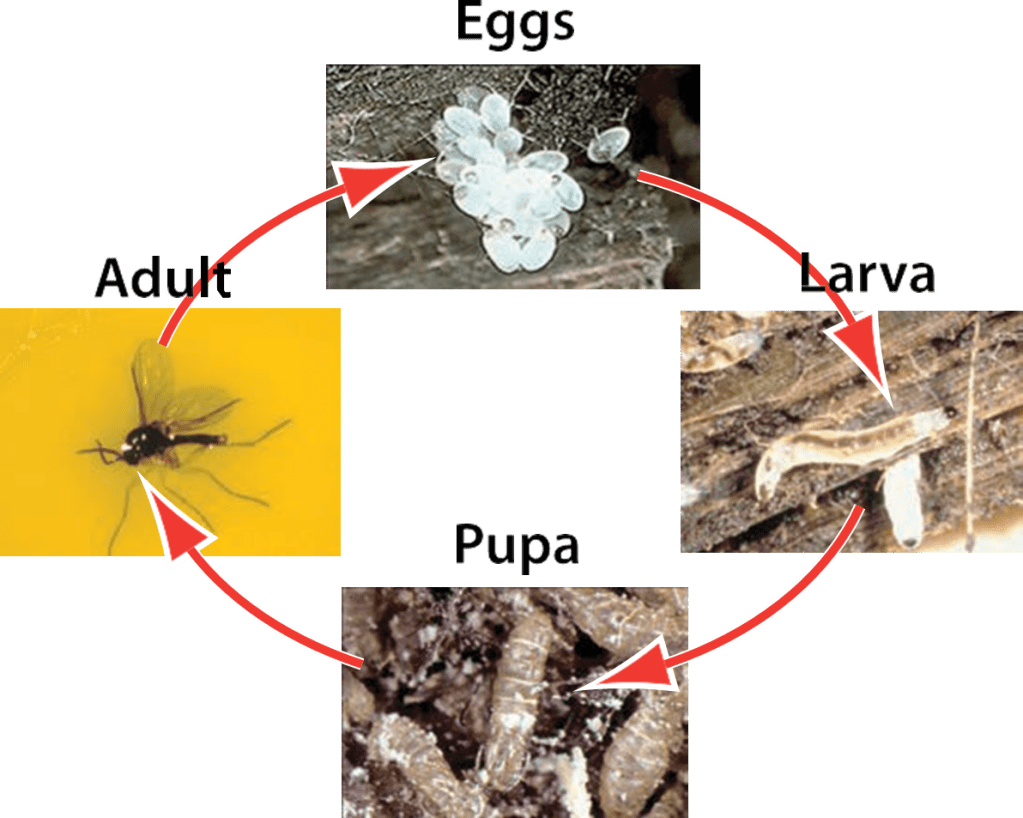
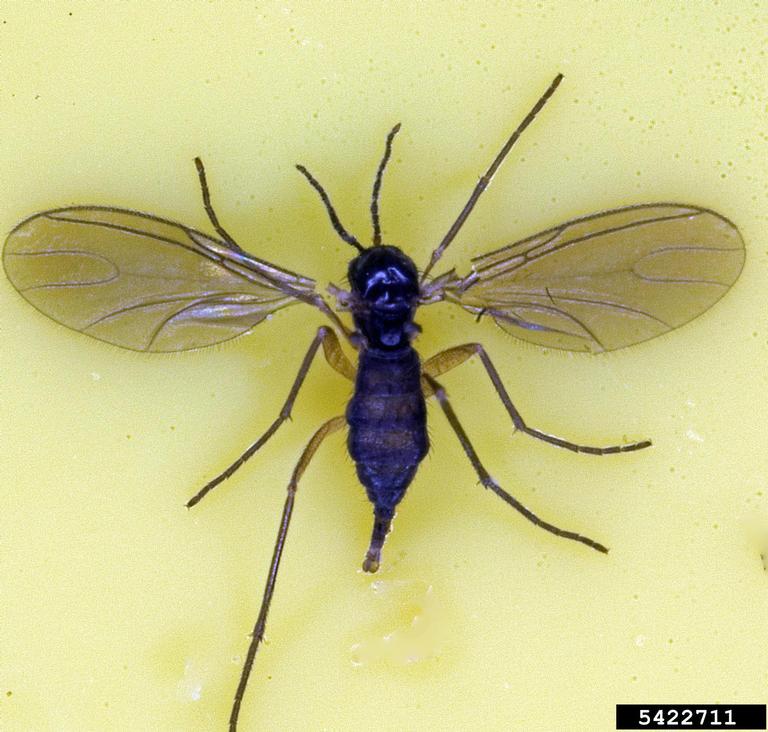
These tiny gnats flying around houseplants, our faces or windows during winter are most likely fungus gnats. These gnats often colonize the potting mix of houseplants when they are moved outdoors for the summer. Fungus gnats do not bite or harm anything in the home, but they are a big nuisance. Fungus gnat adults can lay 100 to 200 eggs on houseplant potting soil during their short lifespan and the larvae feed on the organic matter in potting mixes and also on plant roots.
The main reason that fungus gnats become a problem is due to changes in moisture levels associated with potting soil. Fungus gnat adults are highly attracted to moist-growing media. Houseplants do not use moisture as quickly during the fall and winter and if the potting mix stays too wet, it will become a breeding ground for the gnats very quickly.
An effective way to detect/confirm the presence of fungus gnat larvae is to insert 1/4 inch slices or wedges of potato into the growing medium. Larvae will migrate to the potato and start feeding within a few days. The potato slices should be turned over to look for larvae present on the underside.
What to do
Reducing potting soil moisture is the most important strategy in dealing with fungus gnats. Maintaining a drier soil will decrease survival of any eggs laid and larvae that hatch from the eggs. A drier soil will also reduce the attractiveness of the growing medium to egg-laying adult fungus gnat females.
- Water less frequently and allow the soil to dry out more completely between waterings.
- Blow air over the soil with a fan.
- Change the potting soil if the current soil is old or if necessary to provide better drainage.
Yellow sticky cards can be used to capture adult gnats and can be purchased at garden stores and strategically placed underneath the plant canopy or on the edge of the container.
If gnats are still a problem consider using a Bt (Bacillus thuringensis israelensis) soil drench to kill the larvae, this is a naturally occurring bacteria found in soil and is non-toxic to humans. Gnatrol, Knocks-Out Gnats, and Mosquito Bits are examples of the most readily available brand names. Note that with a product such as Mosquito Bits it can be helpful to soak the bits (up to 4 tablespoons per gallon of water) in water for 30 minutes before drenching the potting soil to ensure good distribution of the bacterium in the houseplant soil. This treatment may need to be repeated every week for 2-3 weeks to ensure control. Do not try to control fungus gnats with Bacillus thuringiensis products that are labeled for caterpillar control; they will not work on fly larvae.
 Central Kansas Lawn & Garden Blog