
It feels too early to be thinking about next spring, but believe it or not, now is a good time to boost the spring wow factor of your landscape by planting hardy bulbs. Many spring bulbs are also a wonderful early season food source for our pollinators.
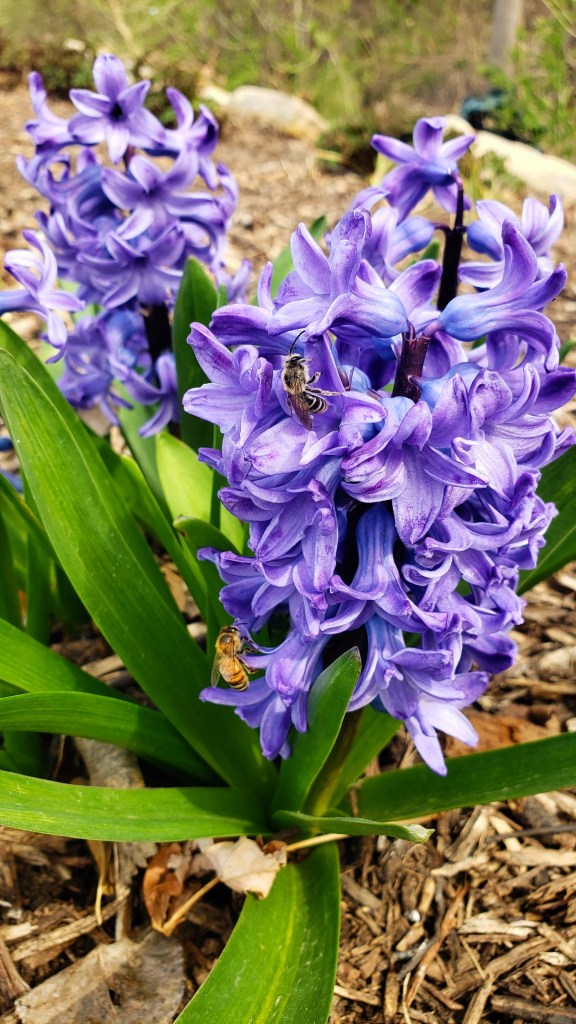
Generally, it is recommended to plant hardy bulbs like tulip, hyacinth, allium, crocus, and daffodils in October through early November to give them enough time to root before winter. As long as the soil temperatures are above 40 degrees F, the bulbs will continue root development during the fall. One easy way you can find out how warm the soil temperature is across various parts of the state is to visit our weather data library at http://mesonet.k-state.edu/
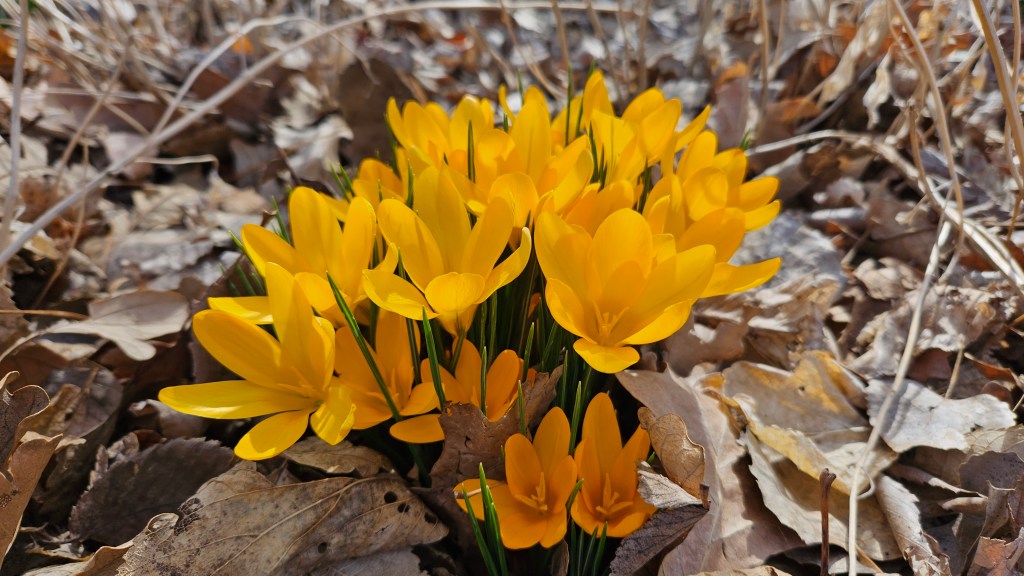
Selecting bulbs
Garden centers often carry a selection of hardy bulbs in the fall and bulbs are also easy to mail order. When shopping, be sure to select large, firm bulbs that have not begun to sprout. Big bulbs are always better and the difference in price almost always pays off with much better performance.
Planting bulbs
Plant bulbs in a site that receives plenty of sunshine as 5-6 hours of sunlight are needed for the best flowering. Bulbs can adapt to a wide range of soil types, but they do not tolerate poorly drained soil. This means it is usually necessary to prepare the planting bed by adding organic matter such as peat moss, well-rotted manure, or compost and mix into the soil. Spread several inches of organic matter over the soil surface and till or spade it in.
Adequate fertility is also essential. It is best to rely on a soil test to determine what nutrients are needed. Garden soils that have been fertilized regularly in the past usually have high levels of phosphorus and potassium. In such cases, it is best to use a fertilizer relatively high in nitrogen such as a 29-5-4, 27-3-3, or something similar. Apply these fertilizers at the rate of 1/2 pound (1 cup) per 100 square feet before planting.
In the absence of a soil test or for soil that has not been regularly fertilized in the past, add a low analysis, balanced garden fertilizer such 10-10-10 at a rate of 1-2 lbs. of fertilizer per 100 square feet of planting bed. Mix all amendments thoroughly with the soil before planting the bulbs.
The size and species of the bulb determines how deep to plant. In general, the depth to the bottom of the planting hole should be about 2 to 3 times the diameter of the bulb, but check the planting instructions specific to each particular flower. Planting too shallow may result in damage to the bulb caused by soil (frost) heaving during the winter. Water the bulbs after planting and monitor the soil for moisture if the fall/winter is dry but do not overwater as bulb rotting may result.

Divide existing bulbs
Fall is also a good time to divide or move existing spring flowering bulbs. The clump should be dug, sorted by size and replanted at the same depth and in properly prepared soil. Sorting by size allows the smaller bulbs to compete better and have more space to develop. Flower size will also be about the same for a more uniform look. In many cases very small bulbs are best discarded as they may never reach flowering size.
Early Spring Bulbs for Kansas
(bloom beginning February to mid-May)
| Flowering Bulbs in Order of Blossoming | Length of Bloom | |
| Snowdrops (Galanthus) | 2–3 weeks | |
| Winter Aconites (Eranthus) | 1–2 weeks (2–3 weeks if several varieties are planted) | |
| Bulbous Irises (Iris) | 1 week (4–6 weeks if several varieties are planted) | |
| Spring Snowflakes (Leucojum) | 1–2 weeks | |
| Crocuses (Crocus) | 2 weeks (4–5 weeks if several varieties are planted) | |
| Glory-of-the-Snow (Chionodoxa) | 3–4 weeks | |
| Squills (Scilla) | 1–2 weeks (2–3 weeks if several varieties are planted) | |
| Early Daffodils (Narcissus) | 2 weeks (3–4 weeks if several varieties are planted) | |
| Early tulips (Tulips) | 1–2 weeks (2–3 weeks if several varieties are planted) | |
| Grape Hyacinths (Muscari) | 2–3 weeks (4–5 weeks if several varieties are planted) | |
Late Spring Bulbs for Kansas
(bloom beginning mid-April to early June)
| Flowering Bulbs in Order of Blossoming | Length of Bloom |
| Daffodils (Narcissus) | 1– 2 weeks (4–5 if several varieties are planted) |
| Hyacinths (Hyacinthus) | 2–3 weeks (4-5 weeks if several varieties are planted) |
| Fritillarias (Fritillaria) | 1 week (2 weeks if several varieties are planted) |
| Tulips (Tulipa) | 1–2 weeks (4– 6 weeks if several varieties are planted) |
| Late Squills (Scilla) | 2–3 weeks (4 weeks if several varieties are planted) |
| Stars-of-Behtlehem (Ornithogalum) | 1– 2 weeks (6– 8 weeks if several varieties are planted) |
| Alliums (Allium) | 2–3 weeks (much of summer if several varieties are planned) |
| Caladiums (Caladium) | colorful foliage, early summer to frost |
| Tuberous Begonias (Begonia tuber) | early summer to frost |
| Lilies ((Lilium) | 3–4 weeks (all summer if several varieties are planted) |
| Cannas (Canna) | 10–12 weeks |
| Gladioluses (Gladiolus) | 2–3 weeks (10–12 weeks with successive plantings) |
 Central Kansas Lawn & Garden Blog