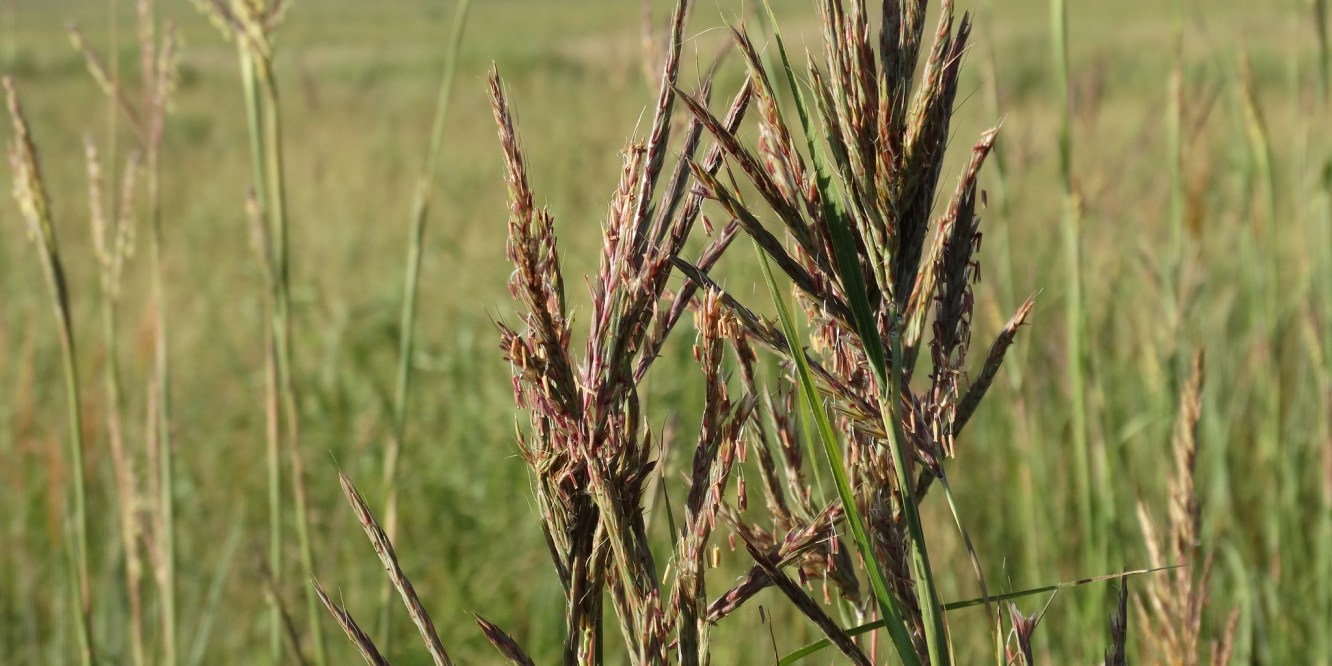
Fall is a great time to see native grasses in all their splendor here in Central Kansas. Our native prairie grasses are not only visually stunning but also crucial for maintaining and building biodiversity. Native grasses are often under appreciated for the contribution they make to our local biodiversity. Grasses on the prairie host many species of caterpillars that are a vital food source for songbirds. Many pollinators also forage for grass pollen to help meet their nutritional needs. Native grasses provide valuable overwintering sites for numerous other beneficial insects and pollinators.
One way to promote biodiversity in our backyards is to include these native prairie grasses that serve as host plants for caterpillars and shelter for other insects in our planting plans. Here are five native grasses that will thrive here in Central Kansas landscapes.
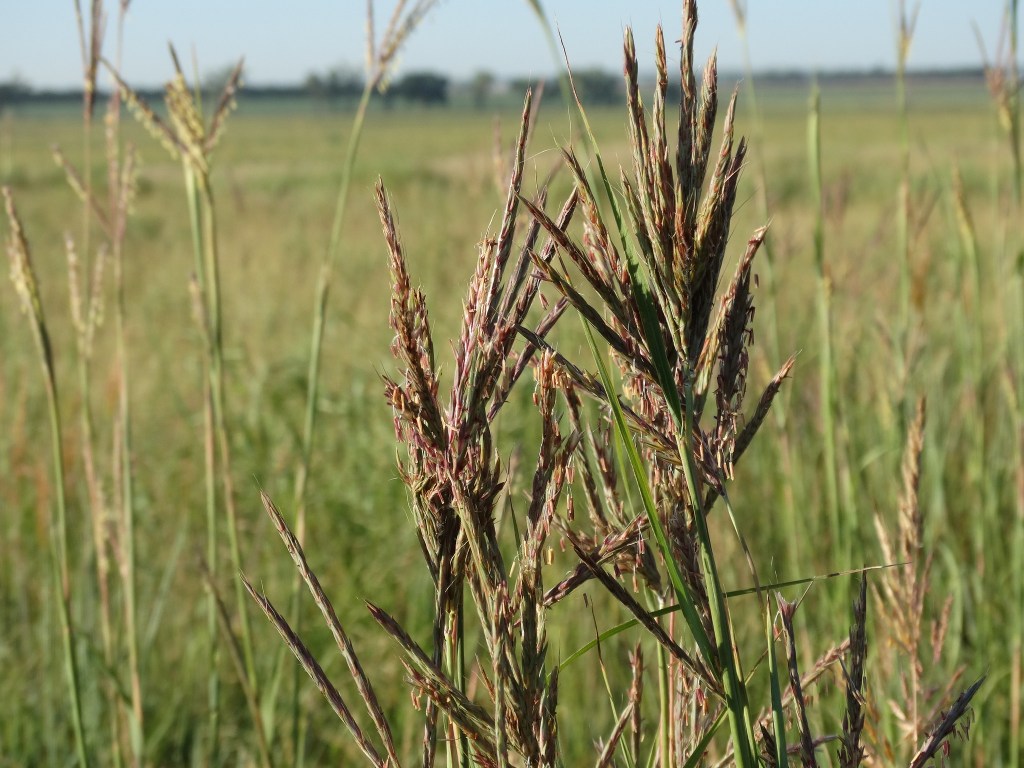
- Big Bluestem (Andropogon gerardii)
Big Bluestem, often referred to as “turkeyfoot” due to its distinctive seed heads, is a dominant native grass in Kansas. It is a valuable host plant for several species (at least 9 or more) of caterpillars, including those of the Ottoe skipper, Delaware skipper, and Dusted skipper butterflies. Big bluestem does require some space in a landscape since it can reach a height of 6 to 8 feet. Consider using newer varieties such as ‘Pawnee’, ‘Silver sunrise’, or ‘Karl’s Cousin’ that stay smaller or more upright for a more well-behaved planting.
- Little Bluestem (Schizachyrium scoparium)

Little Bluestem, another iconic and tough Kansas prairie grass, is a versatile host plant for a variety of caterpillar species (9+ species), such as those of the Arogos skipper, Dusted Skipper, and Swarthy Skipper butterflies. Little Bluestem often fits better in smaller landscapes than Big Bluestem due to its smaller size. There are a number of newer selections that all do well. Its slender, blue-green stems and reddish-brown fall color make it an attractive addition to any landscape.
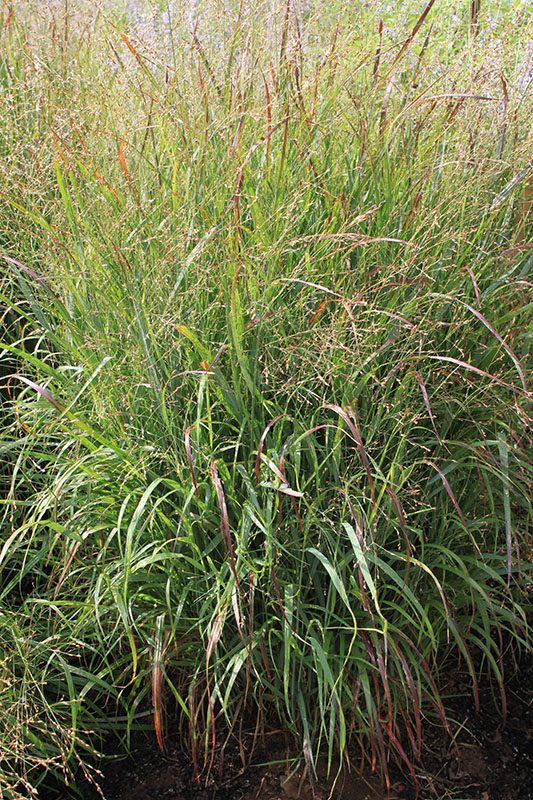
- Switchgrass (Panicum virgatum)
Switchgrass, with its feathery seed heads and tall, sturdy stems, is another native grass that plays a vital role in supporting caterpillars and biodiversity. Several skipper butterfly species, like the Delaware skipper, pink streak moth, Leonard’s skipper, tawny-edged skipper and more, rely on switchgrass as a host plant. Switchgrass also serves as a great overwintering host for bees and other pollinators. This native grass is extremely adaptable and easy to grow in Central Kansas. There are many varieties that will perform very well in a landscape.
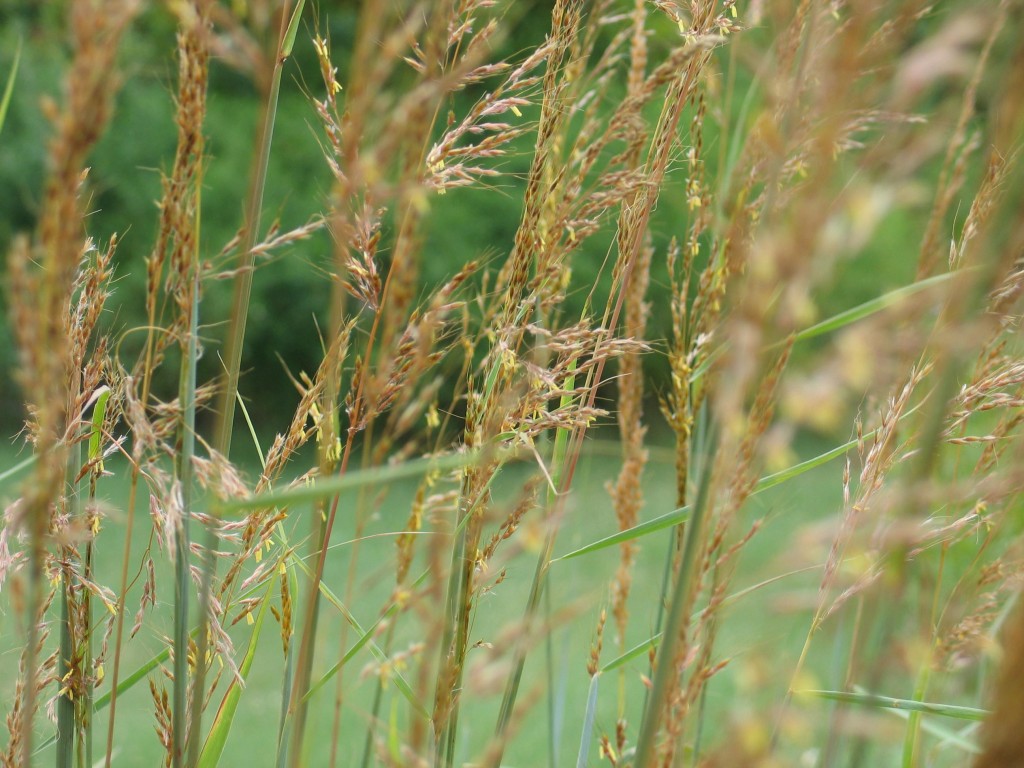
- Indian Grass (Sorghastrum nutans)
Indian Grass is at it’s best in October. It is recognizable by its golden/yellow plumes and upright growth that looks great in both naturalistic and formal plantings. This grass will thrive in many different soil types and serves as a host plant for numerous caterpillars, including those of the Leonard’s Skipper, Delaware Skipper, and Swarthy Skipper butterflies.
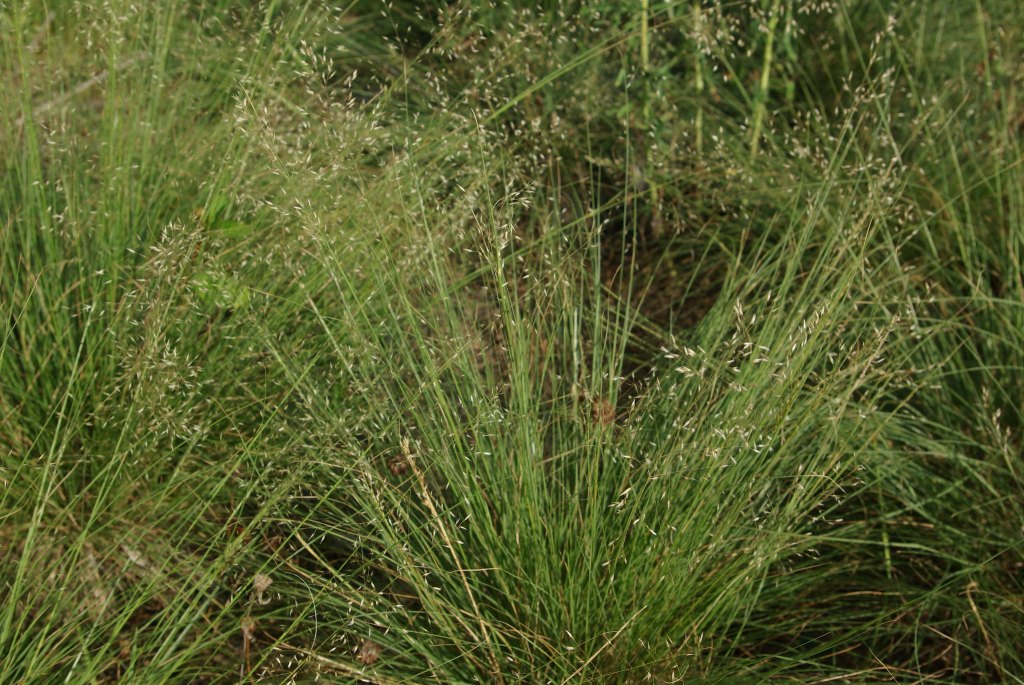
- Prairie Dropseed (Sporobolus heterolepis)
Prairie Dropseed, known for its fine-textured foliage and graceful seed heads, is not only a visually appealing choice for landscaping but also a valuable host plant. Several skipper butterfly species, such as the Dakota Skipper and Poweshiek Skipper, and Ottoe skipper are hosted on it. Prairie dropseed can be easily incorporated into a landscape bed and can even be used as a ‘living mulch’ that is planted between other larger plants to help cover the soil. It also looks great in mass or on a border as a groundcover. It will be well complemented by other short or mid-height perennials.
Check out this link to view a report from the University of Minnesota with more information about how grasses serve as host plants for a variety of lepidopteran insects.
 Central Kansas Lawn & Garden Blog