
Mountain mint is an underused native perennial in the landscape. The name is a misnomer since this plant typically grows in grassy open places, meadows, and woodland areas. The pycnanthemum (pick-nan-the-mum) genus is native to Eastern North America and is a fantastic plant for attracting and supporting pollinators and other beneficial insects in our Central Kansas gardens and landscapes.
When people hear mint they often think of the herb (Mentha) that spreads wildly in the garden. While mountain mint will still spread via rhizomes and can cover ground quickly, it is not as aggressive as other members of the mint family. If naturalizing is unwanted, prune the roots in the spring with a spade to keep the clumps from spreading.
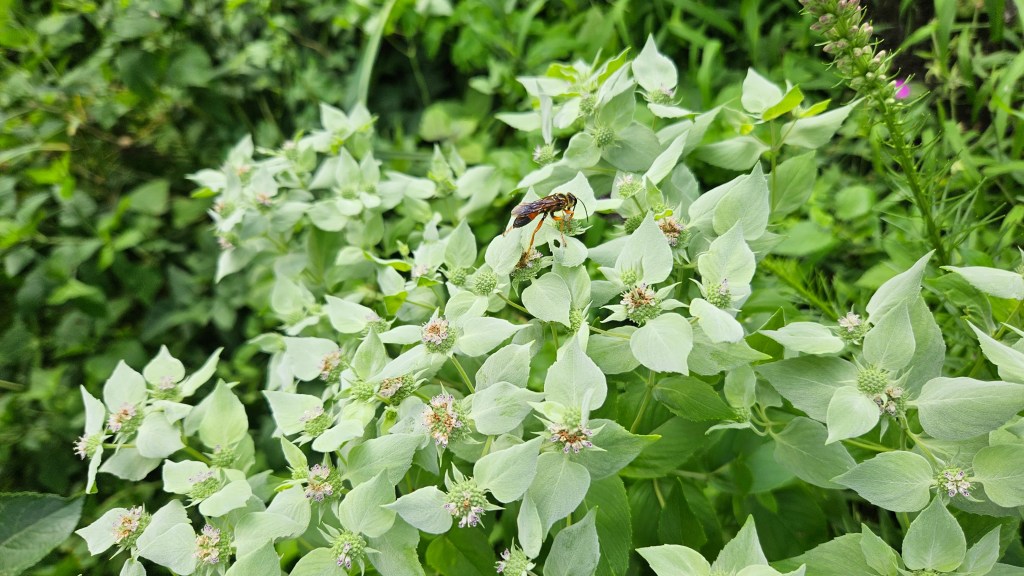

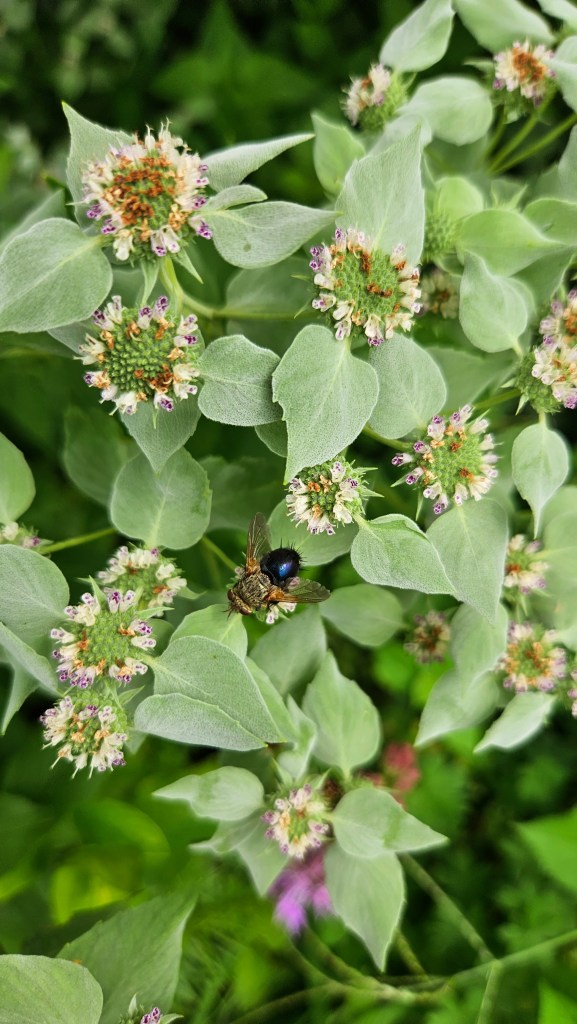

A beneficial insect magnet
Pycnanthemum muticum (commonly called short-toothed mountain mint) grows well here in Central Kansas and the benefits of this plant far outweigh the occasional need to keep it in check. It is a favorite for bees, flies and beneficial and parasitic wasps. Swallowtails, grey hairstreaks, buckeyes and skippers are also often found visiting mountain mint as well.
This plant has a long period of bloom (July through September or even longer) which a huge benefit to the insects that use it since late summer is an important time to provide nectar and pollen. The plant also provides a very unique texture and color that will complement other plants in the garden. The summer flowers with their underlying silver bracts are quite ornamentally attractive when grouped or massed. This is why this plant is best used in herb gardens, cottage gardens, border perimeters. pollinator gardens, or butterfly gardens where it can be allowed to naturalize.
The plant foliage also has a strong mint-like (spearmint) aroma when it is crushed. The leaves can be used to make mild tea.
Short-toothed mountain mint prefers even moisture but can tolerate some drought. It grows best in full sun to part shade. The best flowering occurs in full sun.
When it comes to building biodiversity it is worth investigating all the mountain mints and choosing one or more to include in your own planting. This post from the Dyck Arboretum highlights a couple other varieties of interest. https://dyckarboretum.org/mountain-mint/
 Central Kansas Lawn & Garden Blog