Here in Kansas drought cycles are a reality. In 2023, drought conditions continue to be an ongoing issue here in Central Kansas. Drought cycles vary in their intensity, but the 2022-23 drought cycle has been an intense one with a good portion of the state experiencing D4 (exceptional drought).

Drought conditions are just one reason that interest in native plants continues to skyrocket with Central Kansas gardeners. There are many native plants that have a history of and ability to survive drought on the prairie.
Coneflowers
Coneflowers are coming into their bloom season now and are just one of many natives that tolerate drought and also provide for and build biodiversity by providing essential nectar and pollen for pollinators. These plants also serve as a wonderful food source (seeds) for songbirds during the winter season.
Here are the three coneflowers that should be included in any drought tolerant planting here in Central Kansas.
Echinacea purpurea
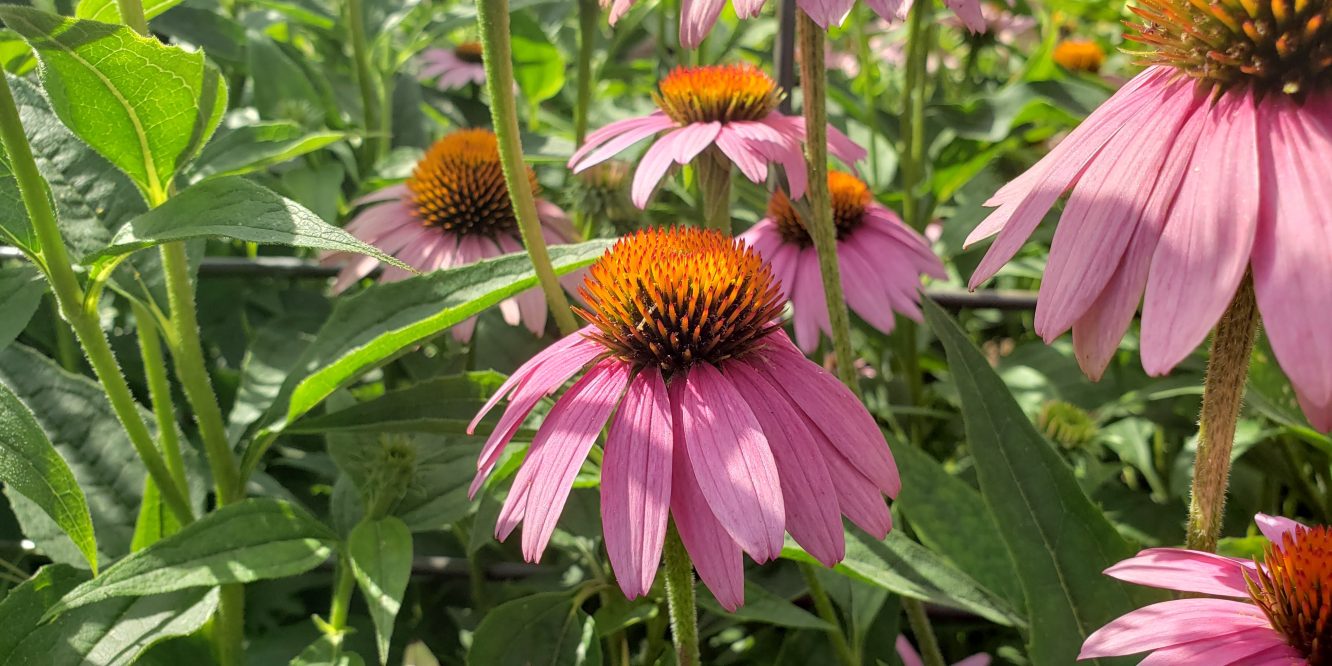
Echinacea purpurea, commonly known as purple coneflower, is a native perennial flowering plant that typically grows to a height of 2 to 4 feet tall (depending on the weather and location). It features sturdy stems with coarse, dark green leaves. The plant produces large, showy flowers with distinct purplish-pink petals surrounding a spiky cone-shaped center, which gives the plant its common name, purple coneflower.
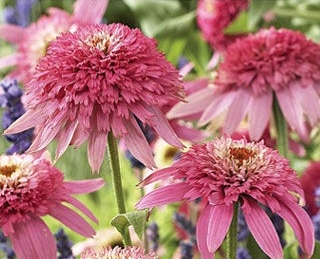
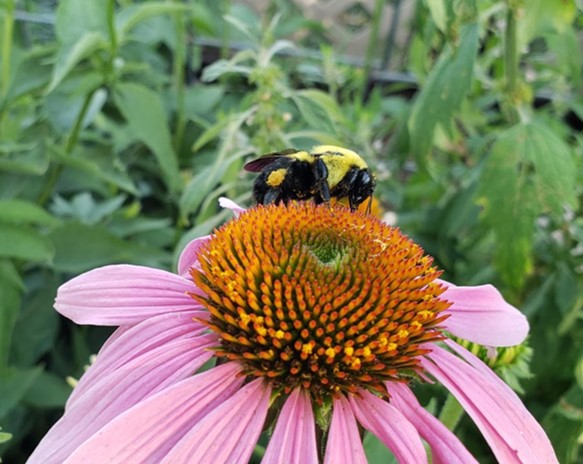
Here in Central Kansas purple coneflower blooms during the summer, from June to August, attracting pollinators like bees and butterflies. The flowers also have a pleasant fragrance as an added bonus. Be aware that some newer varieties of coneflower have traits such as double flowers. These varieties do not support pollinators as well as the standard variety since they restrict access to the flower parts.

Ratibida pinnata
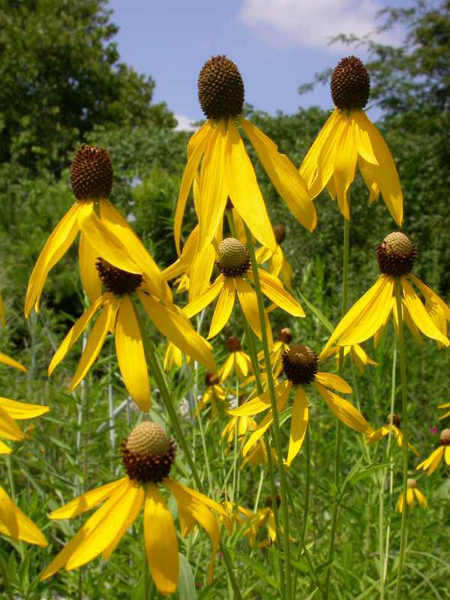
Ratibida pinnata, commonly known as Gray-headed coneflower, is another Kansas native wildflower that is easy to grow, drought tolerant, and ecologically significant. Gray-headed coneflower typically grows to a height of 2 to 5 feet. It has an upright stem with narrow, lance-shaped leaves that are deeply lobed giving the plant its species name “pinnata.” The leaves are usually green, but sometimes they have a bluish tint.
This coneflower blooms from late spring to early fall and provides a vibrant splash of color during the summer with yellow, daisy-like, cone shaped flowers.
Gray-headed coneflower is also known for its attractiveness to pollinators, particularly bees and butterflies, which are attracted to its nectar-rich flowers.
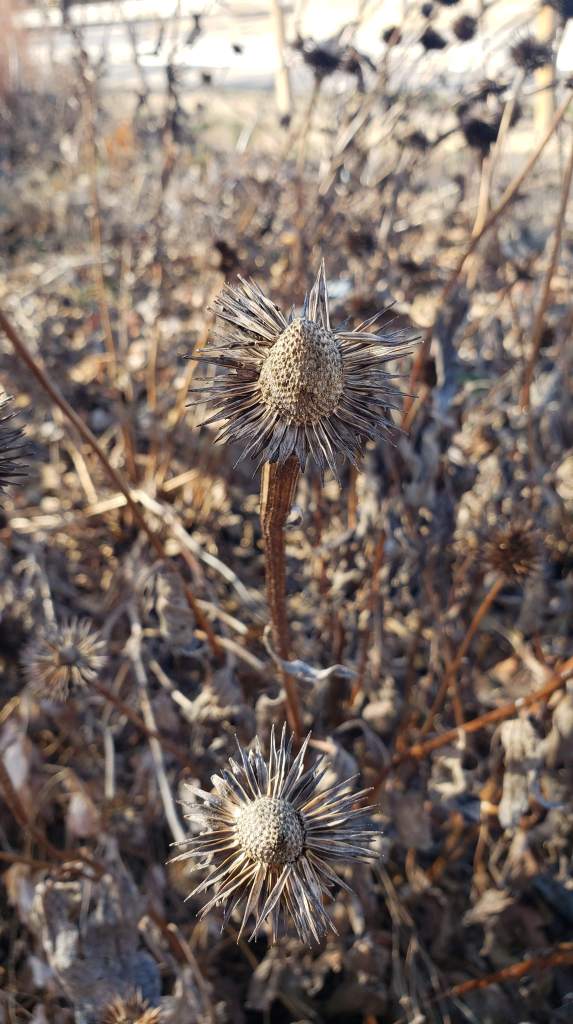
The gray cones contains hundreds of seeds that allow the plant to naturalize and spread over time. Leave the cones on during the winter to feed the birds.
Ratibida columnifera
Ratibida columnifera, commonly known as Mexican hat or prairie coneflower, is our third drought tolerant coneflower. This is a perennial flowering plant that is native to Kansas and typically grows to a height of about 1 to 3 feet.
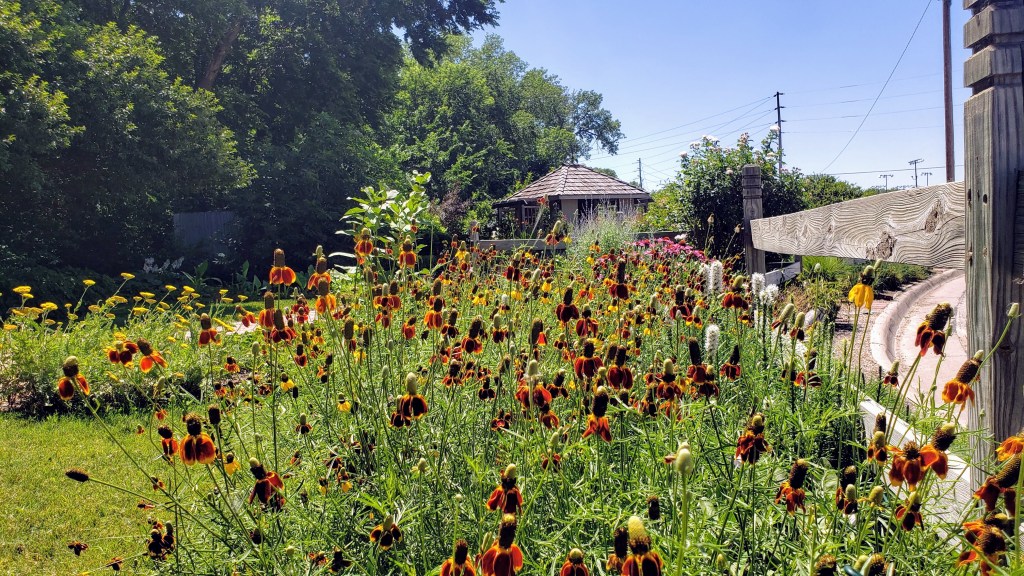
The distinctive flower of Ratibida columnifera is what gives it its common name. The flowers are arranged in a unique and eye-catching manner, with a large, drooping central disk surrounded by elongated petals that resemble a sombrero or a cone-shaped hat. The disk is brown or reddish-brown in color, while the petals are usually yellow or reddish-brown, creating an attractive contrast. The flowers bloom from late spring to early fall, attracting pollinators like bees, butterflies, and hummingbirds.
Mexican hat plants are adaptable and can grow in a variety of soil types, including dry and sandy soils. They are well-suited for prairies, meadows, and wildflower gardens, as well as xeriscapes and naturalized areas. These plants are known for their tolerance to drought and their ability to thrive in our challenging Kansas climate.
For some great resources on using native plants in your landscape check out this K-State Research and Extension resource: https://plantnativeks.weebly.com/
 Central Kansas Lawn & Garden Blog